
Article Summary: The Allen Bradley 1756-CNB is a ControlNet bridge module designed for the ControlLogix automation platform, enabling communication between a ControlNet network and the controller chassis backplane. For factories maintaining established PLC systems, understanding its communication capabilities, installation requirements, and compatibility limitations is essential for minimizing downtime. Feimu helps industrial buyers source automation components for legacy system maintenance and replacement projects. This guide explores the module's specifications, applications, selection considerations, troubleshooting methods, and procurement recommendations.
1. What Is the Allen Bradley 1756-CNB?
2. What Are Its Key Features and Technical Specifications?
3. Where Is the 1756-CNB Commonly Used?
4. How Does It Support Industrial Communication?
5. How Should You Install and Configure the Module?
6. How Can You Troubleshoot Common Communication Problems?
7. How Does the 1756-CNB Compare with Alternative Modules?
8. What Should Buyers Check Before Purchasing?
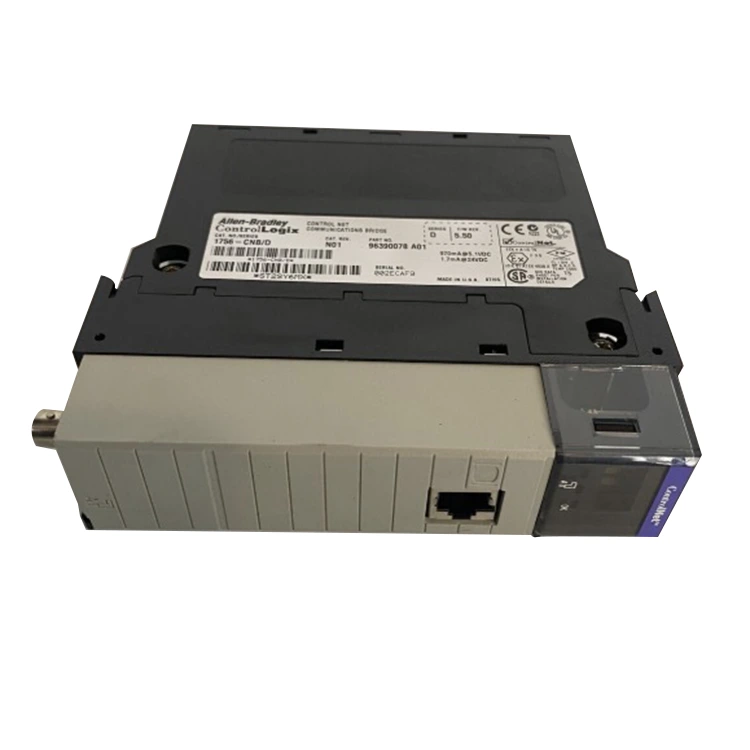
The Allen Bradley 1756-CNB is a ControlNet bridge module developed by Rockwell Automation for the ControlLogix programmable automation controller platform. Its primary function is to connect the ControlLogix chassis backplane with a ControlNet industrial network, allowing controllers and compatible network devices to exchange control information.
In an established manufacturing facility, communication between controllers, distributed I/O, and other automation equipment is essential for coordinated production. The 1756-CNB supports this communication architecture by providing an interface between the controller chassis and the ControlNet network.
Unlike a CPU module, the 1756-CNB does not independently execute the main machine-control program. Instead, it performs a dedicated communication role within the broader automation system. This distinction matters when diagnosing a production interruption because a network communication fault and a controller logic fault require different troubleshooting approaches.
For plants operating legacy ControlLogix installations, replacing a failed communication module with a compatible unit can help maintain existing equipment without immediately redesigning the entire control system. However, engineers should confirm the exact module series, firmware requirements, and system configuration before selecting a replacement.
The 1756-CNB combines ControlNet connectivity with chassis-based installation. Its technical characteristics make it important to check communication capacity, electrical requirements, environmental conditions, and connector compatibility before purchasing or installing a replacement.
| Parameter | Specification |
|---|---|
| Manufacturer | Allen-Bradley / Rockwell Automation |
| Model | 1756-CNB |
| Product family | ControlLogix |
| Module type | ControlNet bridge module |
| Communication protocol | ControlNet |
| ControlNet port | 1 BNC connector |
| Network access port | 1 NAP RJ45 connector |
| Communication rate | 5 Mbps |
| Maximum supported connections | 64 |
| Recommended Logix I/O connections | 40–48, depending on application and configuration |
| Maximum network nodes | 99 |
| Backplane current draw | 970 mA at 5.1 V DC |
| Additional current draw | 1.7 mA at 24 V DC |
| Power dissipation | 5.1 W |
| Operating temperature | 0°C to 60°C |
| Storage temperature | -40°C to 85°C |
| Relative humidity | 5%–95%, noncondensing |
| Slot width | 1 ControlLogix chassis slot |
| Approximate weight | 0.26 kg |
Important specification note: The maximum supported connection count is not the same as the recommended number of Logix I/O connections. Actual capacity depends on the application and configuration. Consult the manufacturer's technical documentation before finalizing a network design.
For additional details, refer to the official Allen-Bradley 1756-CNB product page and the relevant ControlLogix installation documentation.
The Allen Bradley 1756-CNB is most relevant to industrial facilities that already operate ControlLogix systems with ControlNet-based communication. It is especially useful when maintaining established equipment is more practical than undertaking a complete control-system migration.
The suitability of the module depends on the actual network architecture. A system using EtherNet/IP or another communication protocol cannot automatically substitute a ControlNet bridge without evaluating the required interfaces, controller compatibility, and engineering changes.
The value of the 1756-CNB lies in its role within a coordinated automation architecture. Although the module does not replace the controller's logic-processing function, it helps maintain the communication path required for controllers and compatible devices to exchange information.
ControlNet is an industrial network technology designed for deterministic communication. In a properly engineered system, its scheduled communication capabilities help coordinate time-sensitive control information. The 1756-CNB provides the corresponding network interface for compatible ControlLogix installations.
Production systems often contain devices located far from the main controller cabinet. A ControlNet architecture can help connect distributed equipment to the control system, reducing the need to bring every field signal directly into one location.
When a communication module fails, identifying a compatible replacement can be less disruptive than redesigning an entire control network. Maintaining the existing architecture may help reduce engineering work, commissioning time, and production interruptions, provided the replacement meets the application's requirements.
Understanding the bridge module's communication role helps technicians separate network-related problems from controller, power supply, cabling, and field-device faults. This improves troubleshooting efficiency and helps prevent unnecessary component replacement.
Correct installation is essential for communication stability and equipment protection. Before replacing or commissioning a 1756-CNB, technicians should review the applicable Rockwell Automation instructions and the plant's approved maintenance procedures.
Do not assume that inserting a replacement module automatically restores every network connection. The controller project, network configuration, and connected devices must be compatible with the installed hardware.
Communication interruptions can result from hardware faults, incorrect configuration, damaged cables, or problems elsewhere on the network. A systematic diagnostic process helps narrow down the cause before replacing components.
| Observed problem | Possible cause | Recommended action |
|---|---|---|
| Module does not appear to power up | Chassis power, seating, or module fault | Check the power supply, installation, and applicable status indicators. |
| ControlNet communication is intermittent | Cable damage, connector problems, network configuration, or interference | Inspect the network path and review controller and network diagnostics. |
| Remote I/O communication fails | Node configuration, network scheduling, connection limits, or a downstream device issue | Verify the project configuration and isolate the affected network segment. |
| Replacement module does not operate as expected | Incorrect model, incompatible series, or configuration mismatch | Compare the replacement with the original hardware and verify compatibility. |
| Faults return after a restart | Underlying network or hardware problems remain unresolved | Review diagnostic logs and investigate the root cause instead of repeatedly resetting the system. |
Use the module's status indicators and the controller's diagnostic information as the starting point. Exact indicator meanings depend on the module documentation and applicable series. Avoid changing network parameters without understanding their effect on other active devices.
Choosing the correct ControlNet bridge requires more than matching the product family. Network redundancy, connection capacity, existing wiring, and migration plans all influence the decision.
| Module | Communication role | Key selection consideration |
|---|---|---|
| 1756-CNB | Standard ControlNet bridge | Suitable for compatible existing systems using a nonredundant ControlNet interface. |
| 1756-CNBR | Redundant-media ControlNet bridge | Provides two ControlNet BNC ports for compatible redundant-media architectures. |
| 1756-CN2 | ControlNet bridge with higher connection capacity | Potential replacement or upgrade candidate; verify chassis, project, firmware, and network compatibility. |
| 1756-EN2T | EtherNet/IP communication bridge | Relevant to EtherNet/IP architectures, not a direct plug-in substitute for ControlNet. |
Lifecycle consideration: Rockwell Automation lists the 1756-CNB as discontinued effective December 31, 2024, and identifies the 1756-CN2 as a replacement category. This does not mean that every existing installation should immediately be upgraded. The correct choice depends on the installed hardware, engineering requirements, and modernization budget.
Review the manufacturer's 1756-CNB product information and 1756-CN2 product information before making a replacement decision.
For industrial buyers, the primary challenge is often finding a suitable replacement for equipment that remains essential to production. Since the 1756-CNB is a discontinued model, procurement should include careful verification rather than relying on the catalog number alone.
Feimu supplies industrial automation components from brands including Allen-Bradley and Siemens, supporting buyers who need parts for equipment maintenance and legacy system continuity. For product availability and sourcing assistance, visit the Feimu Allen Bradley 1756-CNB product page.
The 1756-CNB is a ControlNet bridge module for compatible ControlLogix systems. It provides a communication interface between the ControlNet network and the chassis backplane.
Yes. Rockwell Automation lists December 31, 2024, as its discontinuation date. Buyers maintaining existing systems should confirm current availability and consider approved replacement options.
The module supports a ControlNet communication rate of 5 Mbps. Actual system performance also depends on the network design, configuration, connected devices, and application requirements.
The published maximum is 64 supported connections and 99 network nodes. The recommended Logix I/O connection range is 40–48, so engineers should verify the actual application requirements before finalizing a design.
Not automatically. The 1756-CNBR is designed for redundant-media ControlNet applications and has two ControlNet BNC ports. Confirm the network topology, hardware requirements, and configuration before selecting it as a replacement.
Rockwell Automation identifies the 1756-CN2 as a replacement category for the discontinued 1756-CNB. However, replacement suitability must be evaluated against the existing chassis, controller configuration, firmware, connections, and network requirements.
Start by reviewing module status indicators, chassis power, cable and connector condition, network configuration, controller diagnostics, and connected-device status. Follow the official troubleshooting documentation before replacing hardware or changing network parameters.
You can contact Feimu to check availability, condition, lead time, and replacement options. Because the model is discontinued, confirm the exact unit specification and supply condition before purchasing.
The Allen Bradley 1756-CNB remains relevant to factories that depend on established ControlLogix and ControlNet infrastructure. Its communication interface, 5 Mbps network rate, and support for compatible industrial network configurations make it an important component for maintaining certain legacy automation systems. However, its discontinued status means that buyers must pay particular attention to availability, hardware condition, and replacement compatibility.
Whether you need a replacement communication module, support for an existing ControlNet installation, or guidance on evaluating alternatives, Feimu can help you review your sourcing requirements. Visit our Allen Bradley 1756-CNB product page and contact us today to confirm availability, request a quotation, and discuss a suitable solution for your industrial automation maintenance needs.