
In process control, data accuracy is not optional. A pressure reading off by 2% can overfill a tank. A flow signal with noise can cause a pump to surge. A level transmitter with drift can shut down a batch. The Allen Bradley 1746-NI4 analog input module addresses these risks.
|
Parameter Name |
Specific Specifications |
|
Product Model |
Allen Bradley 1746-NI4 |
|
Module Type |
4-channel Analog Input Module |
|
Applicable System |
Allen Bradley SLC 500 Control System |
|
Application |
Industrial Process Control (Pressure, Flow, Level Sensing) |
|
Casing Material |
Thick Industrial-grade Green Plastic (Matte Finish) |
|
Key Components |
Independent ADC and Filter Circuit for Each Channel |
|
Backplane Interface |
96-pin, Gold-plated Pins |
|
Panel Feature |
LED Status Indicator Lights (4 Channels Corresponding) |
|
Terminal Block |
Large, Detachable, Sturdy |
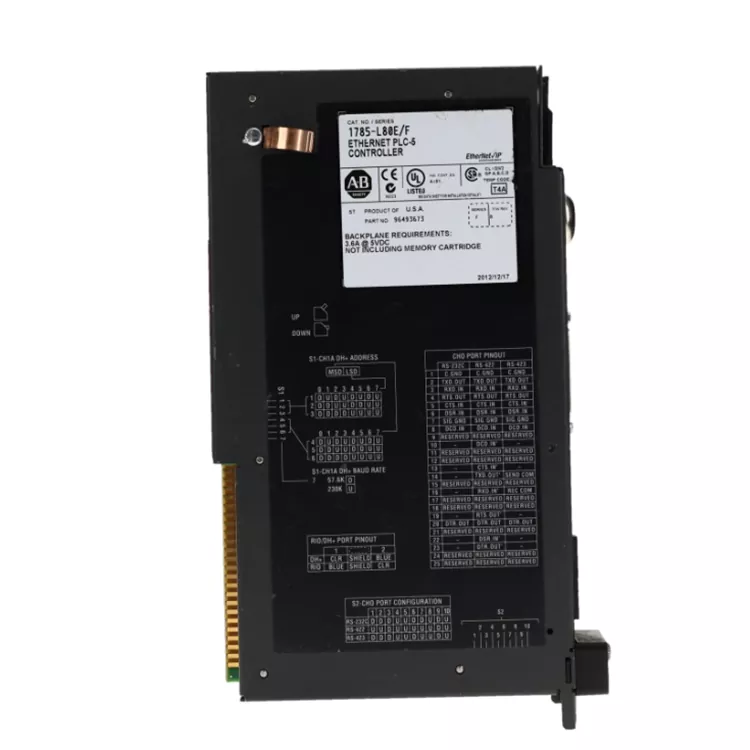
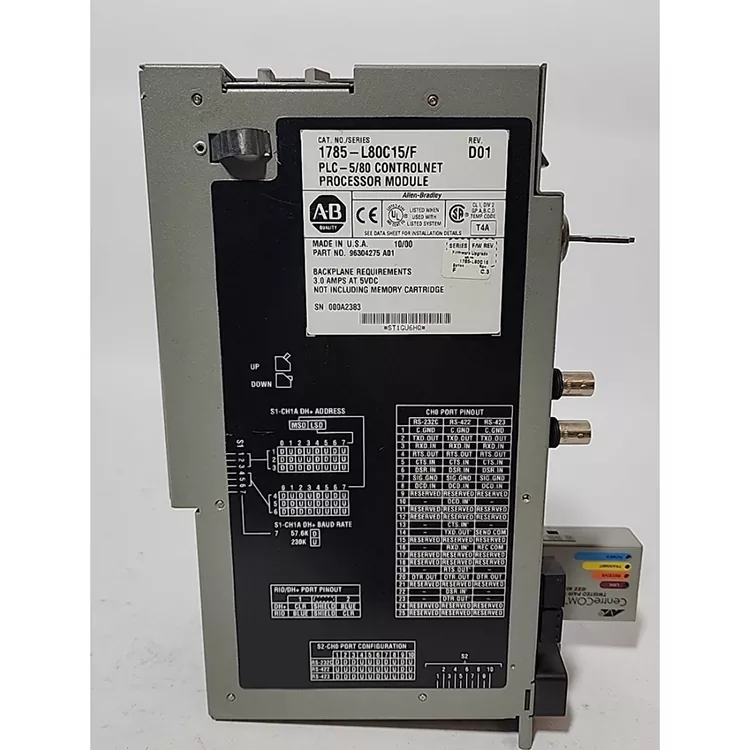
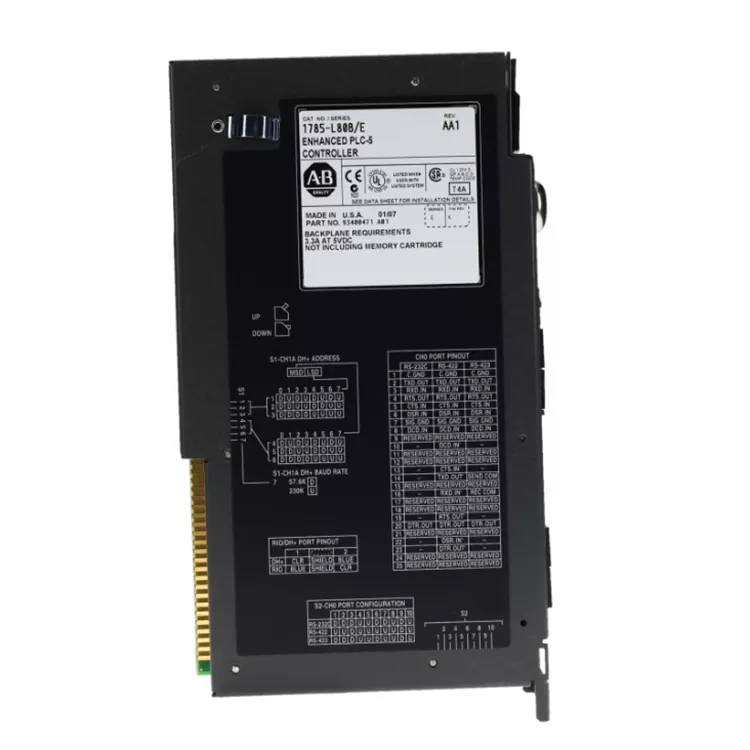
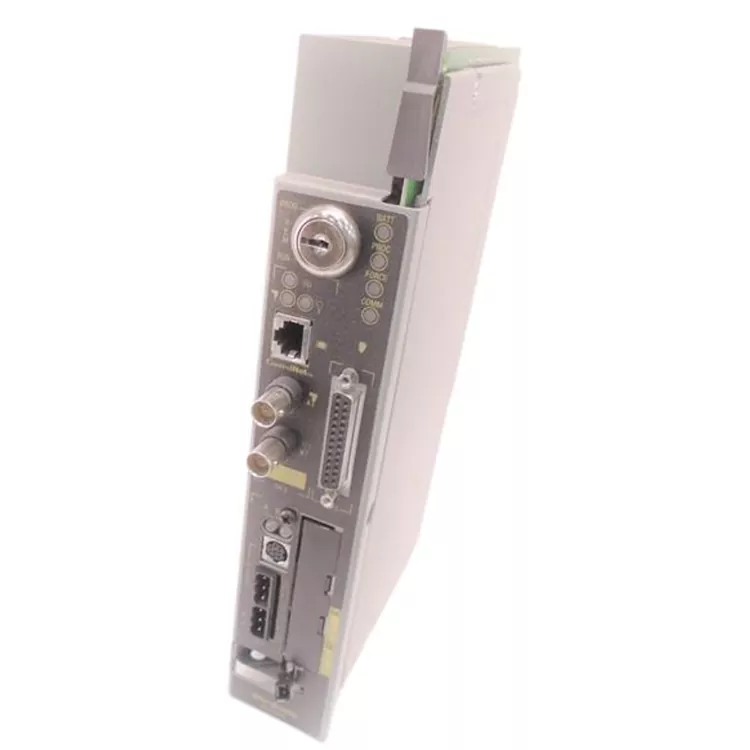
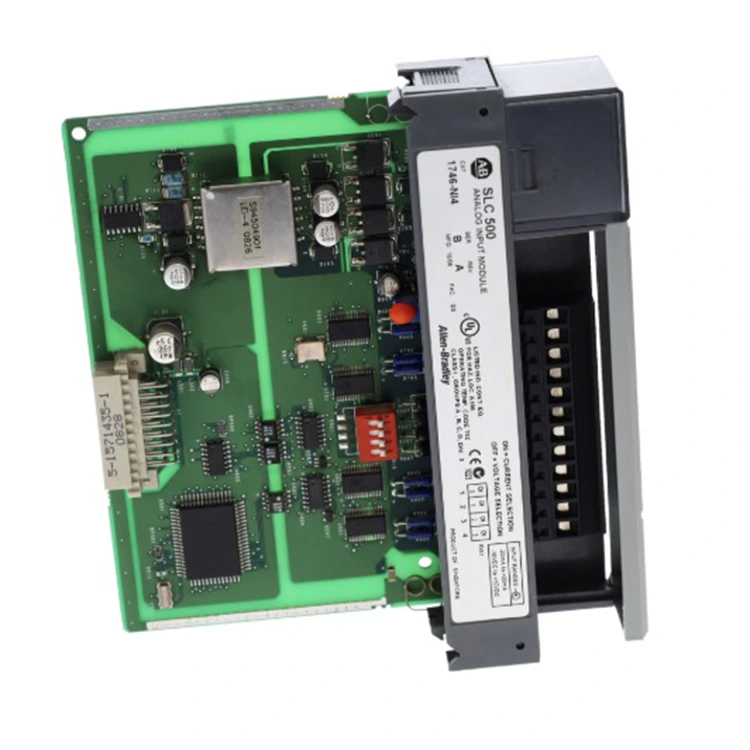
When holding this module in your hand, the first impression is that it is "thick" and "precise". Its casing is made of thick industrial-grade green plastic, with a matte finish on the surface. It feels very good to touch and is not prone to slipping. The design on the panel is very simple and elegant. The most prominent feature is the row of LED status indicator lights corresponding to the 4 channels. As soon as the channel receives a signal, the green light will turn on, which is particularly intuitive. The large and detachable terminal block at the top looks very sturdy, giving the impression that it can withstand long-term and frequent wiring.
The circuit board of this Allen Bradley 1746-NI4 module is equipped with an independent analog-to-digital converter and filtering circuit for each channel. It's like giving each signal channel a "screen" to filter out all the noise and interference from the site, leaving only the real signals. The electronic components inside are arranged neatly, and the key parts are protected by insulating coatings. The 96-pin back panel interface on the back has all gold-plated pins, with high hardness. When inserted into the frame, the contact is particularly tight and it is not afraid of vibrations.
The maintenance of this module is very simple. It should be kept in the cabinet at all times. The most important thing is to prevent dust from accumulating in the ventilation gaps, as this can affect the heat dissipation. Also, it is necessary to regularly check the connection screws on the terminal block to ensure they are not loose. If they are loose, the contact resistance will increase, and the readings will be inaccurate. If it is not used for a long time, it is recommended to unplug it and put it in an anti-static bag, and store it in a temperature-controlled and dry cabinet. The most important point is that when connecting the wires, you must clearly distinguish the positive and negative poles. Do not connect them wrongly, as doing so may result in inaccurate readings or burning the module.
In this industry, everyone knows that if the analog module at the site breaks down, the pressure and flow data will be lost, and production is very likely to encounter accidents. Feimu Technology is particularly efficient in this regard. For the regular model 1746-NI4, we have dedicated stock in the warehouse and can deliver the goods on the same day of the order. In case of an extremely urgent situation, we can even arrange the fastest flight for you, and the product will be delivered to you within two or three days. What we need to do is to prevent your system from being paralyzed due to the absence of an input module.
The Allen Bradley 1746-NI4 uses a detachable terminal block located at the top of the module. Each channel has two terminals: IN+ and IN-.
Current signal wiring (4-20mA or 0-20mA): Connect the transmitter positive wire to IN+. Connect the negative wire to IN-. The module reads the voltage drop across a 250Ω internal resistor. The transmitter must be loop-powered from an external supply. Do not connect the loop power to the module. The module does not provide loop power.
Voltage signal wiring (0-10V or ±10V): Connect the signal positive wire to IN+. Connect the signal negative wire to IN-. The input impedance is greater than 100 MΩ. This high impedance prevents signal loading.
Using 2-wire transmitters: Connect the transmitter positive wire to the positive terminal of the external power supply. Connect the transmitter negative wire to IN+. Connect IN- to the power supply negative terminal. This completes the current loop through the module.
Using 3-wire transmitters: Connect the transmitter power positive to the external supply positive. Connect the transmitter power negative to the external supply negative. Connect the transmitter signal positive to IN+. Connect the transmitter signal negative to the external supply negative (or to IN- if isolated).
Channel configuration: Use RSLogix 500 to select the input type for each channel. Options include 4-20mA, 0-20mA, 0-10V, ±10V. Also select the data format. Engineering units (scaled to the transmitter range) is the most common choice.
Common field issue: The module reads 0mA or 0V even though the transmitter has power. Cause: The transmitter negative is connected to IN- but the transmitter power negative is connected to the power supply ground, creating a ground loop. Fix: Use an isolated power supply for each transmitter. Or use a 3-wire transmitter that separates power and signal grounds.
The 1746-NI4 has two features that separate it from lower-cost analog modules: per-channel ADC and configurable filtering.
Per-channel ADC: Each channel has its own analog-to-digital converter. This means all 4 channels update simultaneously. There is no scan delay between channels. For applications with fast-changing signals, this is critical.
Digital filtering: The module applies a digital filter to each channel. The filter removes high-frequency noise from motors, drives, and other electrical interference. The filter default is 50Hz and 60Hz rejection. This is suitable for most industrial environments.
Settling time: When a signal changes, the module output reaches the new value after 50ms. With filtering enabled, the settling time extends to 100ms. For most processes, this is not an issue. For fast-response applications, use the 1746-NI4 with the filter disabled.
When to adjust filtering: If the reading fluctuates more than 0.5% without cause, enable additional filtering. This can be done in the channel configuration. If the reading is slow to respond, reduce the number of samples averaged. The trade-off is stability versus response speed.
Allen Bradley modules are widely counterfeited. Use these five checks to verify that your 1746-NI4 is genuine.
Front panel color: Genuine Allen Bradley modules use a specific green color, not dark green, not light green. The color has a matte finish. Counterfeit panels are often too shiny or the wrong shade.
Backplane connector pins: All 96 pins on the backplane connector must be gold-plated and straight. Counterfeit modules often use tin-plated pins. Tin pins show a dull gray color. Gold pins show a bright yellow-gold color.
Terminal block label: The terminal block has a label with the module number 1746-NI4 printed on it. The label is permanent. It does not peel. Counterfeit labels often peel at the edges.
Latch mechanism: The top and bottom latches on the module click firmly. They do not wobble. On counterfeit modules, the latches are often loose and do not lock properly.
Weight: The genuine 1746-NI4 weighs approximately 0.45 kg. Counterfeit modules often feel lighter because they use smaller internal components.
Feimu Technology does not ship untested modules. Each Allen Bradley 1746-NI4 goes through the following process before leaving our warehouse.
Step 1 – Visual inspection: Front panel checked for scratches and correct color. Terminal block inspected for bent pins. Latch mechanism tested for firm click. Backplane connector checked for bent pins.
Step 2 – Backplane test: Module inserted into SLC 500 chassis. Power applied. Module power LED confirmed on. RSLogix 500 online. Module recognized by the controller. No fault lights.
Step 3 – Channel test: A 4-20mA signal source connected to each channel sequentially. Reading confirmed at 4mA and 20mA. Accuracy verified within 0.1% tolerance. All 4 channels tested.
Step 4 – Data format test: Module configured for engineering units. Reading confirmed against the signal source. A 12mA signal must read 50% of range. A 16mA signal must read 75% of range. Values confirmed on the controller.
Step 5 – Packaging: Module placed in anti-static bag. Sealed. Placed in foam-lined box. Labeled with module number and test date.
Warranty: 12 months from shipment date. Covers manufacturing defects and component failure. If a module fails within the warranty period, we replace it. No repair charges. No restocking fees. We cover return shipping for defective units.
Address
No. 26, Yuhu Street, Encheng Subdistrict, Enping City, Jiangmen City, Guangdong Province, China
Tel