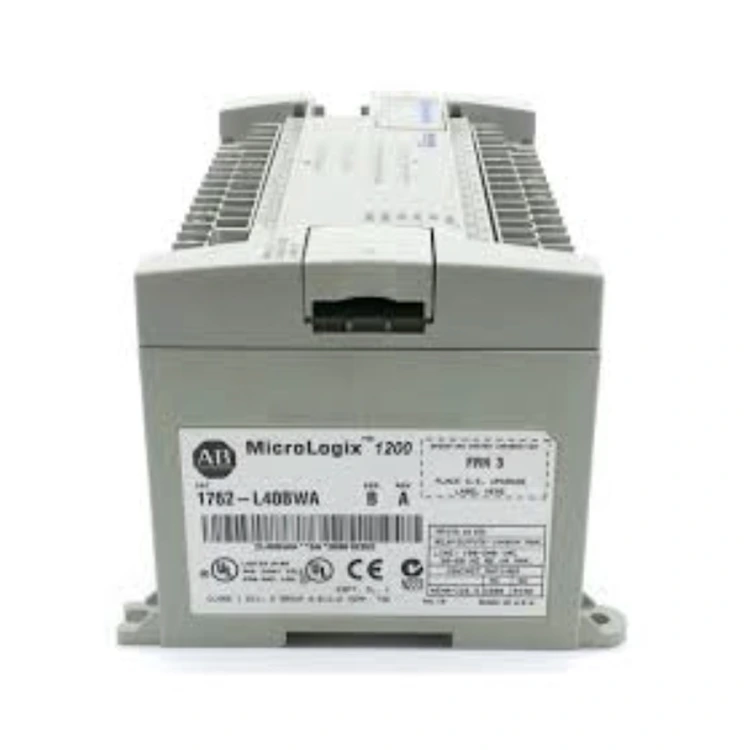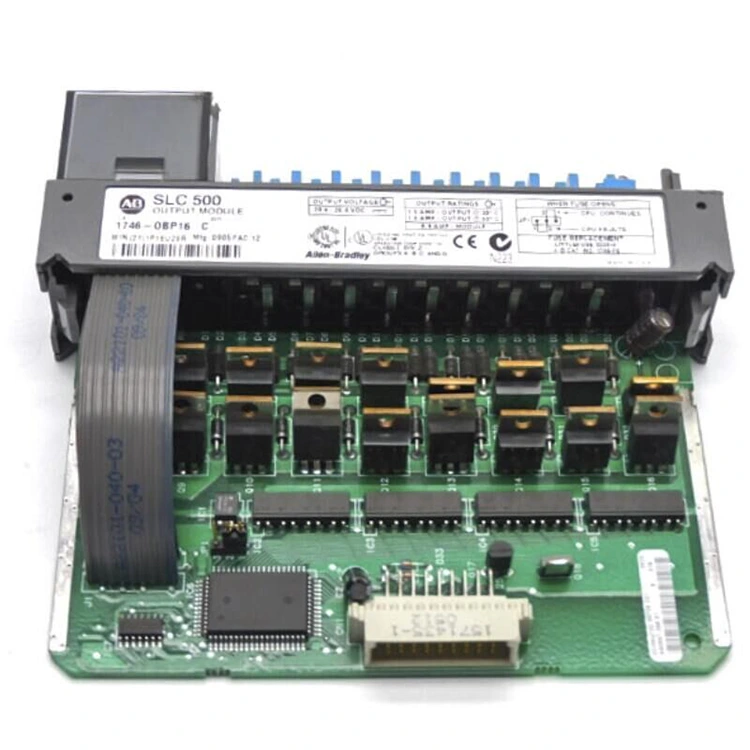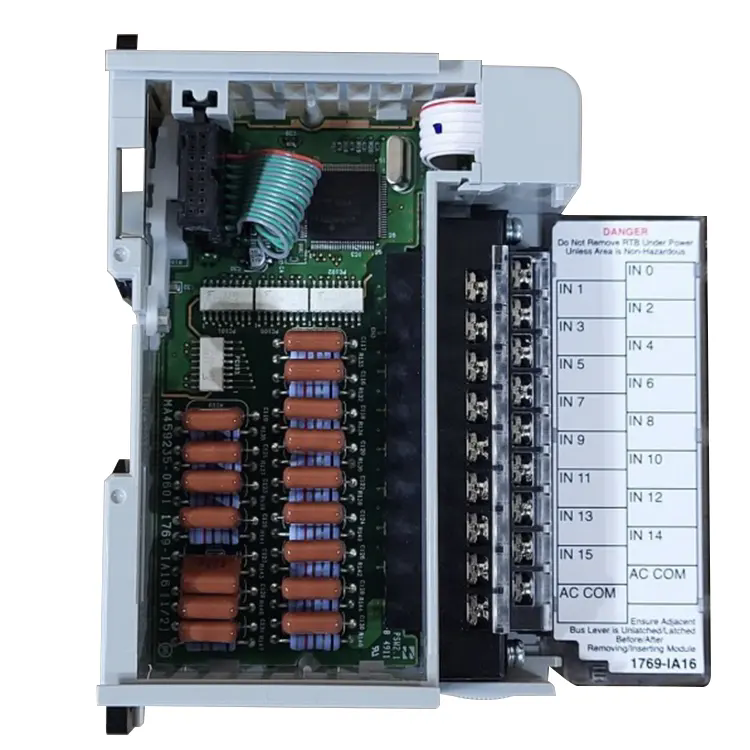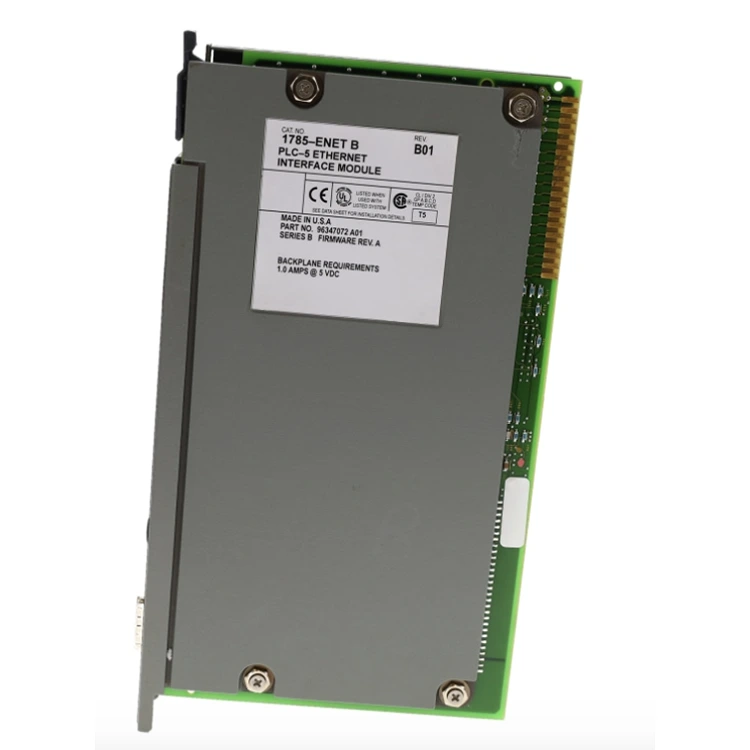

Allen Bradley 1769-IA16 is a 16-point 120V AC digital input module designed for CompactLogix control architectures. For factories sourcing dependable automation components, Feimu provides this module for applications requiring compact installation, practical field wiring, and reliable monitoring of AC-powered switches and sensors. Its 16 input channels and compact form factor make it suitable for control cabinets where I/O density and straightforward maintenance matter.
The Allen Bradley 1769-IA16 is a Compact 120V AC input module with 16 digital input points. It accepts an operating input range of approximately 79–132V AC at 47–63Hz and draws up to 115mA at 5V DC from the Compact I/O bus. The module provides a practical interface between field-level AC signals and a PLC control system, making it useful for limit switches, push buttons, status contacts, and other compatible AC devices. This guide explains its specifications, wiring considerations, installation benefits, troubleshooting methods, and selection factors for industrial automation projects.

Table of Contents
- What Is the Allen Bradley 1769-IA16?
- What Are the Key Specifications?
- Why Use a 16-Point AC Input Module?
- Where Is the Module Commonly Used?
- How Should the 1769-IA16 Be Wired?
- How Does It Compare With a 24V DC Input Module?
- How Can Common Input Problems Be Troubleshot?
- What Should Buyers Check Before Purchasing?
- Frequently Asked Questions
- How Can You Source the Module?
What Is the Allen Bradley 1769-IA16?
The Allen Bradley 1769-IA16 is a digital AC input module belonging to the 1769 Compact I/O family. It is designed to interface field devices operating with 100/120V AC signals with compatible PLC control hardware.
Unlike a controller, the module does not execute the control program itself. Instead, it receives electrical status signals from field devices and transfers their input states through the Compact I/O system to the controller. This makes it an important interface component in automation panels where reliable field signal acquisition is required.
The module provides 16 input channels, allowing multiple AC devices to be monitored through one compact I/O position. According to the manufacturer's technical documentation, the supported operating voltage range is 79–132V AC at 47–63Hz.
For projects that already use the 1769 Compact I/O architecture, selecting the correct input voltage category is particularly important. The 1769-IA16 is intended for AC input applications rather than general-purpose 24V DC input requirements.
What Are the Key Specifications?
Understanding the electrical characteristics before installation helps engineers confirm whether the module matches the field devices and controller architecture.
| Specification | Allen Bradley 1769-IA16 |
|---|---|
| Module Type | Digital AC Input Module |
| Number of Inputs | 16 points |
| Voltage Category | 100/120V AC |
| Operating Voltage | 79–132V AC |
| Frequency | 47–63Hz |
| Maximum Bus Current | 115mA at 5V DC |
| Bus Power Consumption | 0.575W |
| Maximum Input Delay | 20ms ON / 20ms OFF |
| Input Arrangement | 16 inputs with internally connected common |
| Typical System | 1769 Compact I/O / CompactLogix architecture |
| Dimensions | Approximately 87mm deep × 118mm high |
These specifications are especially useful when checking cabinet power budgets, field voltage compatibility, available I/O positions, and PLC configuration requirements.
Why Use a 16-Point AC Input Module?
Space-Efficient I/O Expansion
Control cabinets often have limited DIN rail and panel space. A compact 16-point module allows multiple AC signals to be collected without requiring a large number of individual interface components.
Suitable for 120V AC Field Signals
Many industrial machines use AC-powered control devices, switches, and status circuits. The 1769-IA16 is designed specifically for this voltage category, simplifying the interface between compatible field circuits and the PLC.
Clear Channel-Level Diagnostics
Input status indicators provide a practical first step during commissioning and maintenance. When a field device changes state, technicians can inspect the corresponding channel indication and compare it with the PLC's input status.
Convenient Maintenance
The removable terminal block design can simplify wiring maintenance and module replacement. Technicians can isolate power, remove the terminal connection according to the applicable safety procedure, replace the module, and restore the connection without unnecessarily rebuilding the field wiring.
Where Is the Module Commonly Used?
The module is appropriate for automation systems where compatible 100/120V AC discrete signals must be monitored. Typical applications include:
- Industrial machine control panels
- Factory automation equipment
- Motor control status monitoring
- AC limit switches
- Push-button control circuits
- Equipment interlock signals
- Machine operating-status feedback
- Conveyor and material-handling systems
- Packaging machinery
- General CompactLogix-based automation systems
The exact application depends on the electrical characteristics of the field device and the overall PLC system design. Engineers should always verify voltage, frequency, common-terminal configuration, controller compatibility, and system documentation before commissioning.
How Should the 1769-IA16 Be Wired?
The 1769-IA16 uses a removable terminal block and provides 16 AC input points. The input channels share an internally connected common, so the common arrangement must be considered when designing the field wiring.
| Wiring Item | Typical Consideration |
|---|---|
| Input Channels | Channels 0–15 |
| Input Signal | Compatible 100/120V AC field signal |
| Common | AC COM shared by the input group |
| Frequency | 47–63Hz |
| Installation | Follow the official wiring and electrical safety documentation |
One important consideration is voltage selection. The 1769-IA16 is an AC input module and should not be treated as a substitute for a 24V DC input module. Applying an incompatible voltage can result in incorrect signal detection or equipment damage.
For detailed installation information, engineers should consult the official 1769-IA16 installation instructions and the relevant CompactLogix documentation before wiring or commissioning.
How Does It Compare With a 24V DC Input Module?
One of the most important selection decisions is whether the automation system requires AC or DC input capability. The 1769-IA16 is designed around 100/120V AC signals, while modules such as the 1769-IQ16 are intended for 24V DC applications.
| Feature | 1769-IA16 | 1769-IQ16 |
|---|---|---|
| Input Type | AC | DC |
| Typical Voltage Category | 100/120V AC | 24V DC |
| Input Points | 16 | 16 |
| Typical Field Devices | AC switches and compatible control circuits | DC sensors and switches |
| Main Selection Factor | AC field voltage | DC field voltage |
The choice should therefore be based primarily on the field signal rather than simply the number of channels. Matching the input module to the actual electrical system is essential for stable PLC operation.
How Can Common Input Problems Be Troubleshot?
When an input does not behave as expected, a structured troubleshooting process can reduce downtime.
- Check field voltage: Verify that the input circuit is supplying the appropriate AC voltage.
- Inspect wiring: Check terminal connections, common wiring, damaged conductors, and loose screws.
- Check the channel indicator: Compare the physical input indication with the expected field-device state.
- Verify PLC configuration: Confirm that the module has been correctly added to the controller's I/O configuration.
- Check the slot: Make sure the controller program is reading the correct I/O location.
- Inspect the Compact I/O connection: Check that the module is properly seated and that the bus connection is not damaged.
- Test the field device: A failed switch, sensor, fuse, or control circuit can appear to be an I/O module fault.
For technical diagnosis, measurements should be performed by qualified personnel using appropriate electrical safety procedures. The official Rockwell Automation 1769-IA16 product documentation should be used as the primary reference for installation and system compatibility.
What Should Buyers Check Before Purchasing?
When sourcing an industrial automation module, the catalog number alone should not be the only purchasing criterion. Buyers should evaluate several practical factors:
- Exact catalog number: Confirm that the required module is 1769-IA16 rather than another 1769-series input model.
- Electrical compatibility: Verify the required AC voltage and frequency.
- Product condition: Clarify whether the item is new, unused, refurbished, or previously installed.
- Testing: Ask whether functional testing is available before shipment.
- Packaging: Industrial electronic modules should be protected against static electricity, impact, moisture, and contamination.
- Availability: For maintenance projects, actual stock status can be more important than a nominal lead time.
- Technical support: A supplier should be able to provide product specifications and assist with basic compatibility questions.
Feimu Technology states that its supplied automation components are inspected and functionally tested before shipment. For buyers managing urgent replacement requirements, checking actual inventory and testing availability before placing an order can help reduce unnecessary production downtime.
Frequently Asked Questions
What is the Allen Bradley 1769-IA16 used for?
The 1769-IA16 is a 16-point digital AC input module used to receive compatible 100/120V AC field signals and communicate their input states to a compatible 1769 Compact I/O control system.
How many inputs does the 1769-IA16 have?
It provides 16 digital input points. The inputs are arranged as a group with an internally connected common.
What voltage does the 1769-IA16 support?
The module is designed for a 100/120V AC voltage category and has an operating range of approximately 79–132V AC at 47–63Hz.
Can the 1769-IA16 be used for 24V DC inputs?
No. The 1769-IA16 is an AC input module. Applications requiring 24V DC input signals should use an appropriate DC input module instead.
Is the 1769-IA16 a standalone PLC?
No. It is an I/O module and does not contain a CPU for running the user's control program. It operates as part of a compatible control architecture.
What is the maximum bus current draw?
The published specification indicates a maximum bus current draw of 115mA at 5V DC, equivalent to approximately 0.575W.
Where can I find official technical documentation?
The official Rockwell Automation product page and its technical documentation provide detailed electrical, installation, configuration, and certification information.
How Can You Source the Module?
For factories, system integrators, maintenance teams, and automation distributors, selecting a suitable source for an industrial I/O module involves more than checking the catalog number. Product condition, functional testing, stock availability, packaging, documentation, and technical communication can all affect the success of an urgent replacement or planned automation project.
Feimu Technology supplies industrial automation components and provides information regarding the Allen Bradley 1769-IA16, including availability and product details. If you are planning a replacement, system expansion, or spare-parts purchase, view the Allen Bradley 1769-IA16 product page or contact us for current stock information, pricing, product verification, and purchasing support.