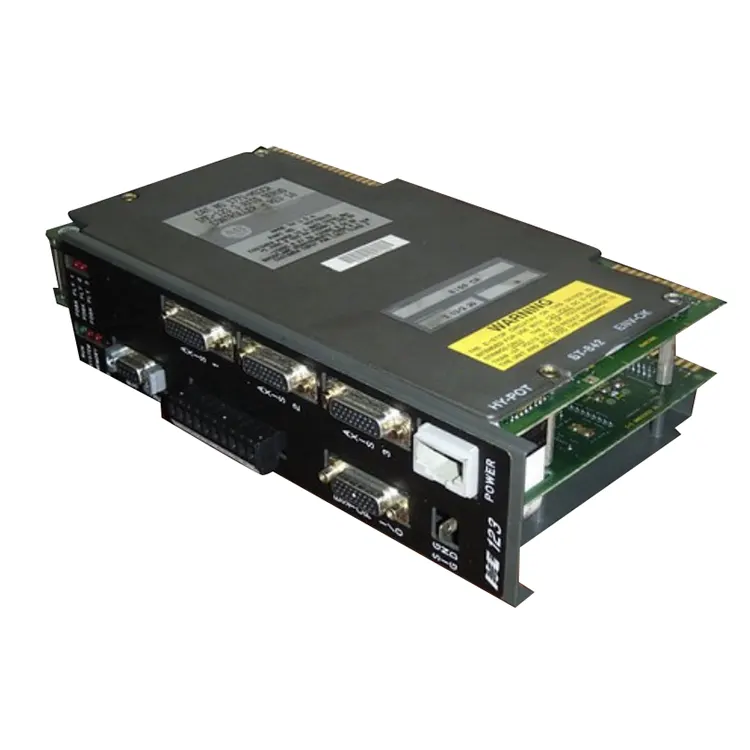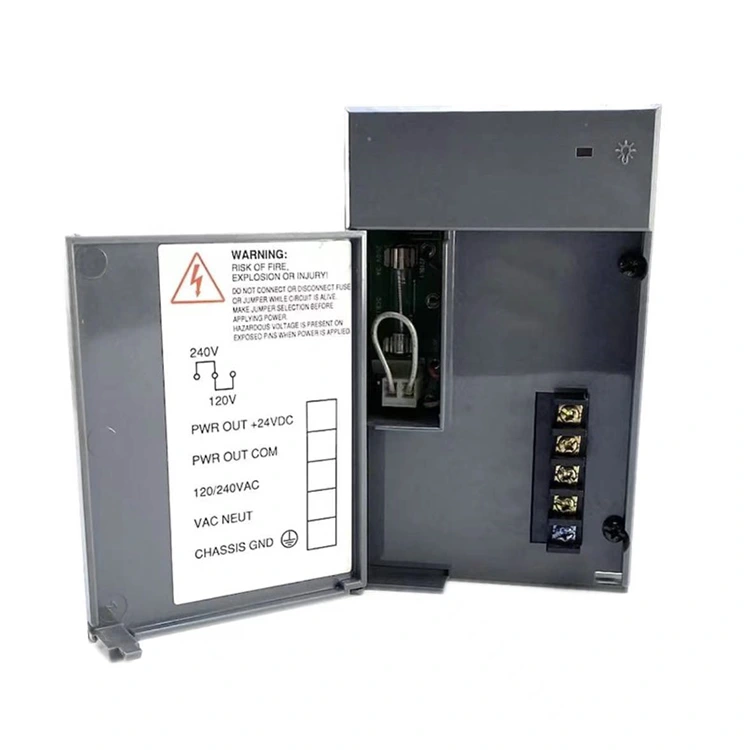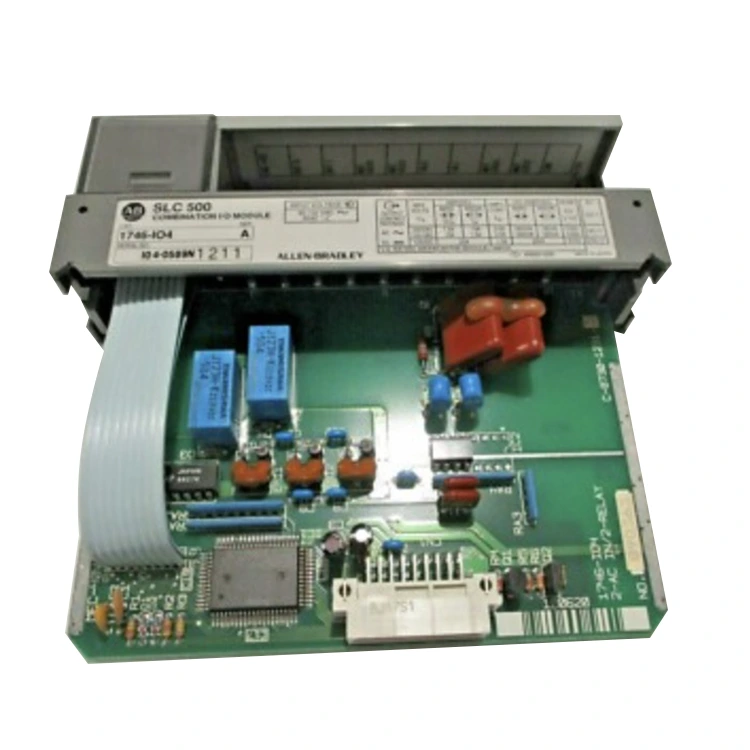

For industrial plants that depend on proven PLC-5 architecture, the Allen Bradley 1785-L86B remains a practical processor for maintaining demanding legacy control systems. As an experienced automation component supplier, Feimu provides tested PLC-5 processors for customers who need dependable replacements, system maintenance, and long-term operational support.
The Allen Bradley 1785-L86B is a PLC-5/86 processor designed for large and complex industrial control applications. With substantial user memory, extensive I/O capability, multiple communication interfaces, and compatibility with RSLogix 5, it can continue supporting legacy production systems without requiring an immediate and costly migration to a completely new control platform.

The Allen Bradley 1785-L86B is a PLC-5/86 processor developed for industrial automation systems that require substantial program capacity, I/O management, and reliable control logic. It belongs to the classic Allen-Bradley PLC-5 family, a platform widely used in manufacturing and process-control environments.
Although newer programmable controllers provide modern networking and programming functions, many factories continue operating PLC-5-based equipment because their production systems were engineered around this architecture. Replacing the complete control system can involve extensive engineering work, rewiring, software conversion, validation, downtime, and capital expenditure.
For these environments, maintaining a functional 1785-L86B can be a more practical short- or medium-term strategy. The processor can handle complex ladder logic and coordinate numerous control devices while preserving compatibility with an established PLC-5 system architecture.
For procurement teams, the right sourcing strategy for legacy PLC components is therefore just as important as the processor's technical specifications.
Understanding the technical characteristics of the Allen Bradley 1785-L86B helps engineers determine whether it is suitable for an existing PLC-5 application. The following table summarizes commonly referenced specifications for this processor.
| Parameter | Specification |
|---|---|
| Product Model | Allen Bradley 1785-L86B |
| PLC Series | PLC-5/86 |
| User Memory | Up to 100K words |
| I/O Capacity | Up to 2048 points according to Feimu product specifications |
| Communication | RS-232/423/485, DH+, Remote I/O |
| Programming Software | RSLogix 5 |
| Module Size | Two-slot module |
| Operating Temperature | 0°C to 60°C |
| Storage Temperature | -40°C to 85°C |
| Relative Humidity | 5% to 95%, non-condensing |
| Backplane Current | Up to 2.8 A at 5 V DC according to Feimu specifications |
One of the most important characteristics is its large memory capacity. A 100K-word processor provides considerable space for ladder logic and data management, making the L86B particularly useful in applications where control programs have expanded over years of operation.
The primary advantage of the Allen Bradley 1785-L86B is not simply its processing capability. Its greatest value is its ability to help industrial facilities maintain an established automation architecture.
With up to 100K words of user memory, the processor can accommodate relatively extensive control programs and data structures. This is useful for production lines containing numerous sequences, interlocks, timers, counters, and process-control routines.
For facilities already using PLC-5 equipment, replacing a failed processor with a compatible unit can be significantly less disruptive than rebuilding the entire control system.
The processor supports established industrial communication interfaces, including DH+ and Remote I/O. These capabilities allow it to remain integrated with existing PLC-5-era controllers, I/O systems, drives, operator interfaces, and other field equipment.
Legacy PLC-5 processors were designed for industrial environments rather than general-purpose computing. Their dedicated control architecture allows them to perform deterministic automation tasks continuously as part of a properly maintained control system.
Maintaining an existing controller can give a factory additional time to plan a future modernization project. Instead of replacing equipment immediately after a processor failure, an available spare can help restore production while the engineering team evaluates a longer-term migration strategy.
The 1785-L86B is suitable for legacy industrial applications where PLC-5 infrastructure remains operational. Its combination of memory, I/O management, and communication capability makes it applicable to a broad range of control environments.
Before purchasing a replacement processor, engineers should verify the existing chassis configuration, I/O architecture, communication requirements, software environment, and program backup. Technical compatibility should always be confirmed against the actual installed system.
Industrial automation rarely depends on a processor operating alone. A controller must communicate with I/O modules, operator interfaces, drives, remote equipment, and other control devices.
The Allen Bradley 1785-L86B supports established PLC-5 communication architecture, including DH+ and Remote I/O. These interfaces are particularly important for facilities that have accumulated a large installed base of PLC-5-compatible equipment.
For a legacy system, retaining the original communication architecture can reduce the amount of rewiring and software modification required during a processor replacement. This can be especially valuable when production downtime is expensive or when the original engineering documentation is limited.
Programming and maintenance are also closely associated with the PLC-5 software environment. The Feimu product information identifies RSLogix 5 as the relevant programming software, which can help technicians familiar with PLC-5 systems maintain existing programs and troubleshoot control logic.
Because the Allen Bradley 1785-L86B belongs to a legacy automation platform, maintenance planning is essential. A processor may remain operational for many years, but its supporting components and system infrastructure should not be overlooked.
Maintenance teams should pay particular attention to:
Maintaining a tested spare processor on-site can also reduce the risk associated with unexpected equipment failure. For critical production systems, procurement teams should consider spare-part availability before a processor reaches the end of its service life.
Purchasing a legacy PLC processor requires more than comparing prices. Since discontinued or hard-to-source automation components may vary significantly in condition, buyers should evaluate the supplier's inspection and testing process.
A reliable supplier should be able to provide clear information about:
Feimu positions itself as a China supplier of industrial automation components, with experience supporting legacy Allen Bradley, Siemens, GE, and Schneider systems. According to its product information, the company tests processors before shipment and maintains PLC-5 components for urgent replacement requirements.
For buyers searching for an Allen Bradley 1785-L86B supplier, checking product availability, testing procedures, technical support, and delivery arrangements before placing an order can significantly reduce procurement risk.
Yes. It remains useful in factories and industrial facilities that continue operating PLC-5 control systems. Its compatibility with established PLC-5 architecture can make it valuable for maintenance, replacement, and system continuity.
The 1785-L86B is associated with the PLC-5 programming environment and RSLogix 5. Engineers should verify the existing software version and project backup before performing a replacement or program transfer.
The processor provides up to 100K words of user memory. This relatively large memory capacity makes it suitable for applications containing extensive ladder logic and data structures.
The processor supports established PLC-5 communication interfaces including DH+ and Remote I/O, together with a serial communication interface identified in Feimu's product specifications as RS-232/423/485.
Confirm the exact catalog number, existing PLC-5 chassis configuration, I/O requirements, communication architecture, programming environment, and required memory capacity. It is also important to verify the supplier's testing process and product condition before purchase.
The Allen Bradley 1785-L86B remains a practical solution for industrial facilities that depend on established PLC-5 automation systems. Its large memory capacity, substantial I/O capability, communication interfaces, and compatibility with the traditional PLC-5 environment make it valuable for maintaining complex legacy production equipment.
For companies that need a dependable replacement, emergency spare, or maintenance component, selecting a supplier with product testing and technical experience is essential. If you are sourcing the Allen Bradley 1785-L86B for an existing automation system, contact us at Feimu to check current availability, product specifications, testing information, pricing, and technical support for your application.