
Article Summary: The Allen Bradley 1771-HS3CR is a specialized motion control module designed for PLC-5-based industrial automation systems. Feimu provides this module for maintenance, replacement, and system continuity needs, with product testing and technical support for buyers seeking a dependable solution for legacy automation equipment.

1. What Is the Allen Bradley 1771-HS3CR?
2. Key Technical Specifications
3. Why Does the 1771-HS3CR Matter for Legacy Automation?
4. Typical Industrial Applications
5. Installation and Configuration Considerations
6. Troubleshooting and Maintenance Tips
7. What Should Buyers Check Before Purchasing?
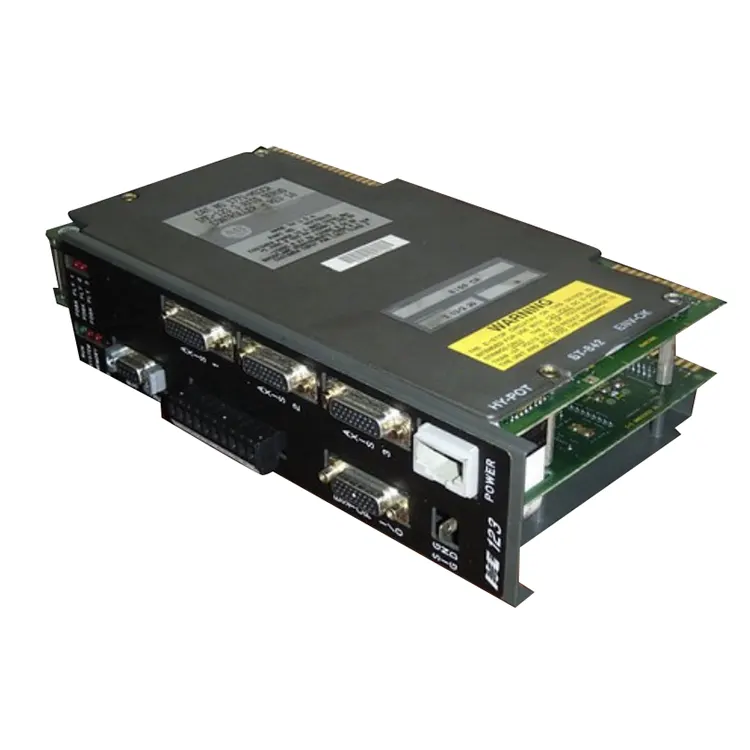
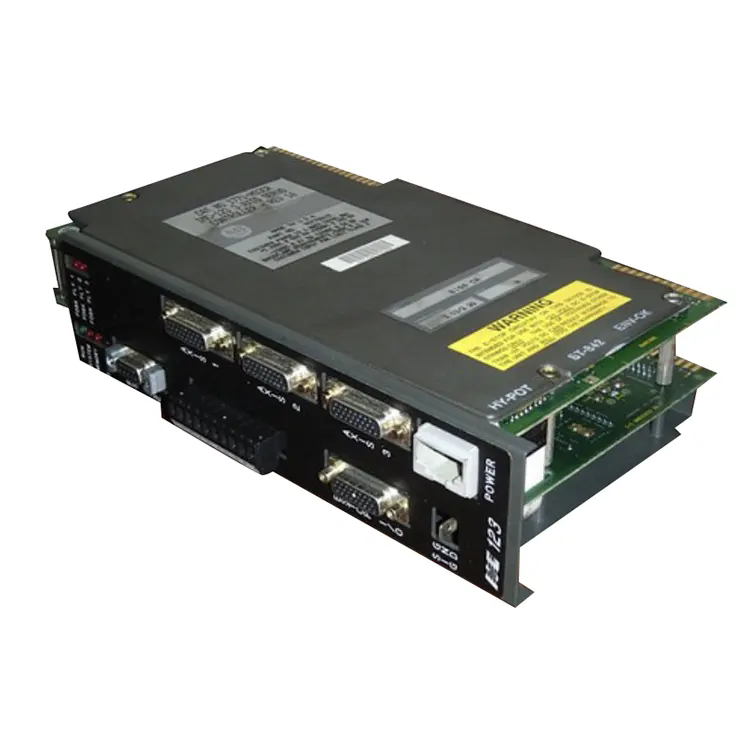
The Allen Bradley 1771-HS3CR is a hybrid motion control module associated with the Allen-Bradley PLC-5 automation platform. It is designed for motion-related applications in legacy 1771 I/O architectures and can provide a practical replacement option when an existing control system must remain operational.
For plants operating mature automation equipment, replacing an entire PLC architecture is often considerably more disruptive than maintaining the existing control platform. A compatible motion module can therefore be important for reducing downtime, simplifying maintenance, and extending the useful service life of established machinery.
Available product information describes the module as a single-axis motion controller with encoder feedback and communication through the 1771 backplane. Typical applications include positioning, winding, tension control, and cut-to-length processes where repeatable motion is required.
Understanding the electrical and mechanical characteristics of a legacy automation module is essential before ordering a replacement. The following specifications provide a practical reference for evaluating system compatibility.
| Parameter | Specification |
|---|---|
| Product Model | Allen Bradley 1771-HS3CR |
| Product Series | 1771 I/O |
| Product Type | Hybrid Motion Control Module |
| Control Axes | 1 axis |
| Feedback Interface | Encoder interface |
| Communication | 1771 backplane / PLC-5 compatible |
| Mounting | 1771 I/O rack |
| Module Size | Single-slot module |
| Backplane Current | 1.5 A at 5 V DC |
| Operating Temperature | 0°C to 60°C |
| Storage Temperature | -40°C to 85°C |
| Relative Humidity | 5% to 95%, non-condensing |
Some third-party technical references describe the broader 1771-HS3CR configuration differently, including a three-axis servo-controller designation and additional electrical specifications. This makes revision, series, and system documentation particularly important when purchasing a replacement. Buyers should verify the exact catalog number and required configuration against the installed system rather than relying only on a product title.
One of the primary reasons engineers search for legacy motion modules is the need to keep an existing control system running. If a production line has been built around a 1771 I/O rack and PLC-5 architecture, replacing a failed component with a compatible module can be considerably more straightforward than redesigning the complete control system.
Encoder feedback is an important element of motion control. By receiving feedback from the motion system, the controller can compare actual movement with programmed requirements. This is particularly useful in applications where position, speed, or repeatability directly affects product quality.
Legacy components can become difficult to source when original production has ended. Maintaining suitable replacement inventory allows maintenance teams to respond faster when a critical module fails.
The 1771-HS3CR is most relevant to industrial facilities where legacy PLC-5 control equipment remains part of the production infrastructure. Motion-control requirements can vary significantly between machines, but several application categories are particularly relevant.
| Application | Motion Requirement | Why Feedback Matters |
|---|---|---|
| Positioning Tables | Accurate movement to defined positions | Confirms actual position |
| Winding Equipment | Controlled rotation and tension | Helps maintain consistent movement |
| Cut-to-Length Systems | Repeatable positioning | Supports dimensional consistency |
| Material Handling | Controlled axis movement | Improves positioning reliability |
| Legacy Production Machines | Continuous motion control | Helps preserve existing machine architecture |
For plants that cannot immediately modernize an entire production line, maintaining compatible PLC-5 components can be a sensible transitional strategy. The correct approach depends on the condition of the existing hardware, available engineering resources, spare-part requirements, and long-term modernization plans.
Installing a legacy motion control module should be treated as an engineering task rather than simply a plug-and-play replacement. Before installation, maintenance personnel should confirm the catalog number, system architecture, rack position, wiring, encoder configuration, and control-program requirements.
Configuration errors can produce symptoms that resemble hardware failure. Incorrect addressing, incompatible parameters, damaged encoder wiring, or missing axis settings should therefore be eliminated before replacing additional components.
When a legacy motion module stops operating correctly, a systematic troubleshooting process can prevent unnecessary replacement costs.
| Symptom | Possible Cause | Recommended Check |
|---|---|---|
| Module has no power indication | Rack power or seating problem | Check chassis power and module seating |
| Module does not enter normal operation | Configuration or PLC communication issue | Check rack address and PLC program |
| Position errors occur | Encoder signal or wiring issue | Inspect encoder cable and feedback signal |
| Unexpected motion | Incorrect motion parameters | Review speed, position, and acceleration settings |
| Intermittent faults | Connector, wiring, or environmental issue | Inspect connections and operating conditions |
Maintenance teams should also record the module's catalog number, series, revision, installation date, application, and observed fault symptoms. This information makes future replacement decisions much easier.
Finding a part number is only the first step when sourcing legacy industrial automation hardware. The physical condition, compatibility, testing process, revision, and supplier support can all affect the practical value of a replacement module.
Confirm that the required component is specifically 1771-HS3CR. Similar-looking catalog numbers can represent different functions or hardware revisions.
Review the existing PLC-5 processor, 1771 rack, wiring, encoder configuration, and application requirements before placing an order.
For used, refurbished, surplus, or discontinued automation hardware, ask whether the unit has been visually inspected and electrically tested.
Industrial electronic modules should be protected against static electricity, impact, moisture, and contamination during transportation. Appropriate protective packaging can reduce the risk of shipping-related damage.
A supplier familiar with legacy PLC equipment can help buyers verify specifications, product condition, availability, and application compatibility before shipment.
The module is used for motion-control functions within legacy Allen-Bradley PLC-5 and 1771 I/O-based automation systems. Typical applications can include positioning, winding, cut-to-length processes, and other controlled motion tasks.
Product information identifies the module with the 1771 I/O architecture. However, compatibility should always be verified against the exact PLC-5 system, rack configuration, wiring, module revision, and application requirements.
Confirm the complete catalog number, revision, rack slot, encoder wiring, control configuration, electrical requirements, and the symptoms of the existing module. This helps distinguish a module failure from a wiring or configuration problem.
Feimu lists the Allen Bradley 1771-HS3CR as an available industrial automation product and provides product inspection and supply support. Buyers should confirm current stock, exact condition, revision, and testing details before ordering.
The Allen Bradley 1771-HS3CR remains relevant wherever established PLC-5 automation equipment continues to support critical production processes. Its role in motion control, encoder feedback, and legacy 1771 architectures makes correct sourcing especially important for maintenance teams seeking to minimize downtime without immediately replacing an entire control system. When selecting a replacement, verify the exact part number, system compatibility, hardware condition, and testing information. If you need current availability, product verification, or technical purchasing assistance from Feimu, contact us to discuss your automation requirements and receive the appropriate product information for your application.