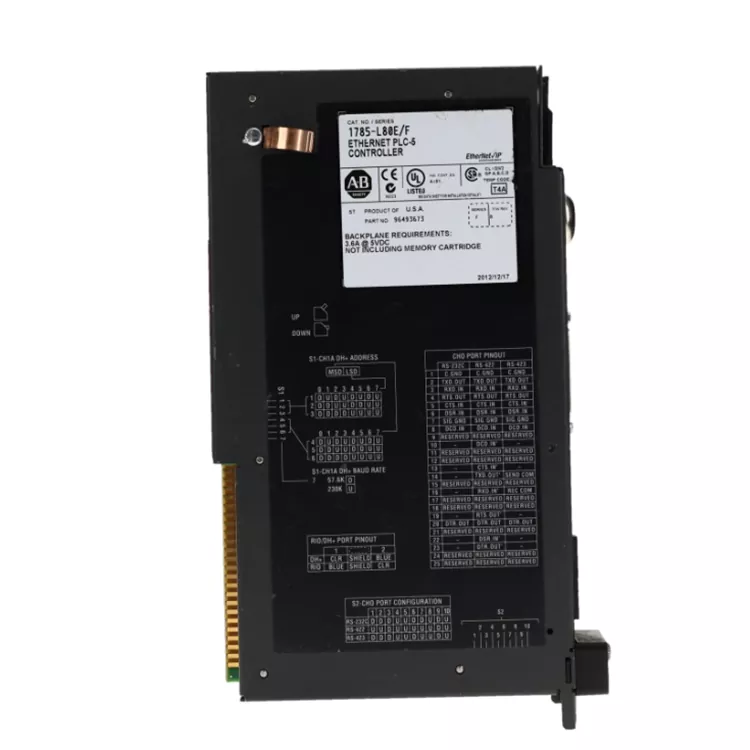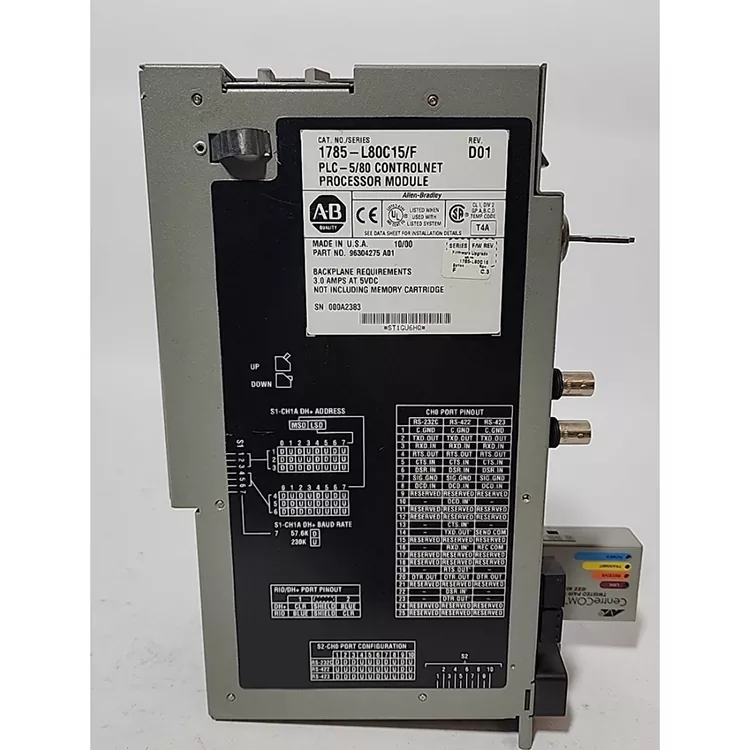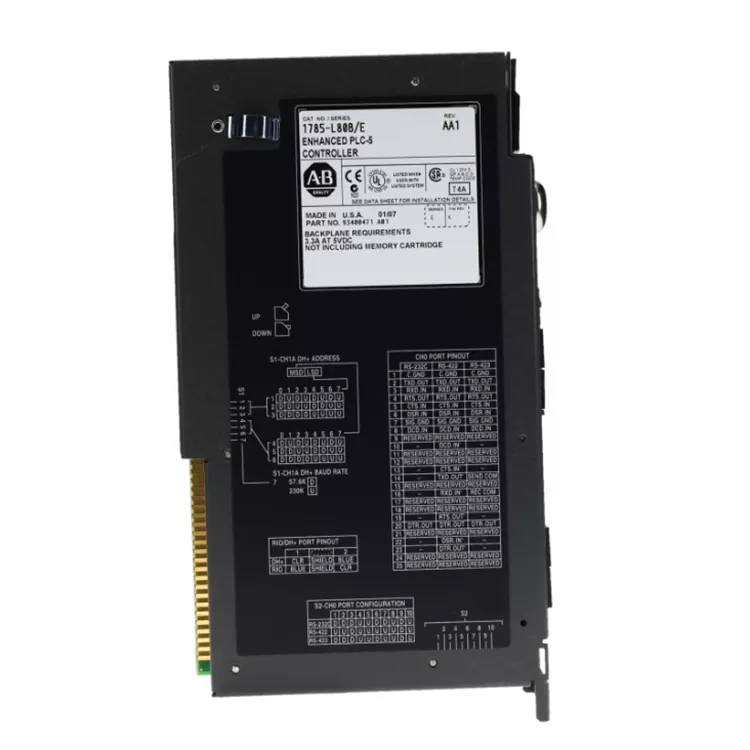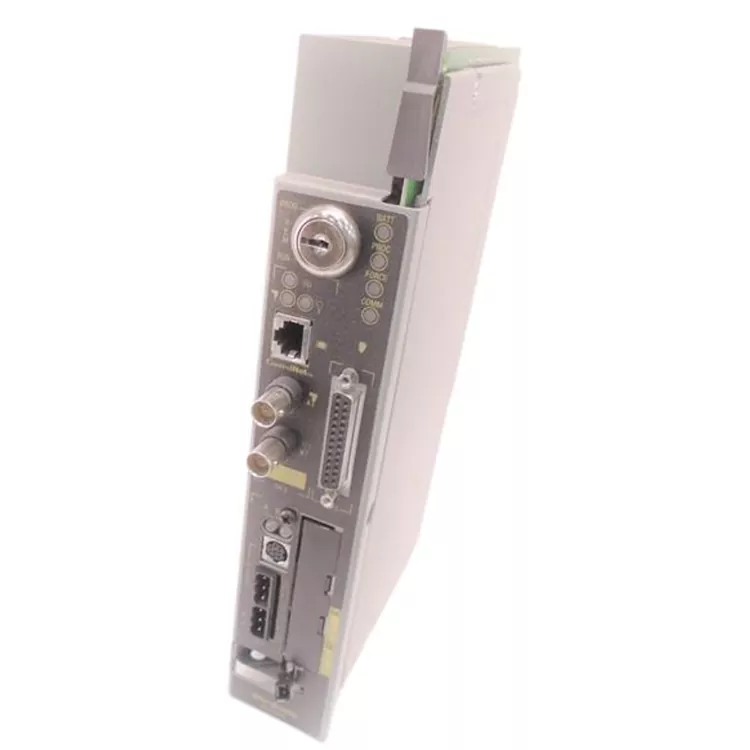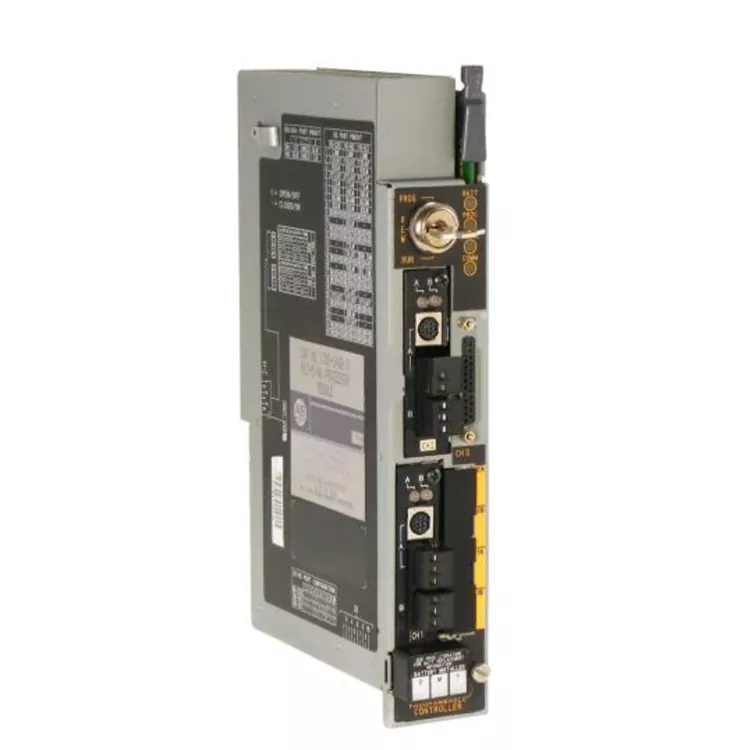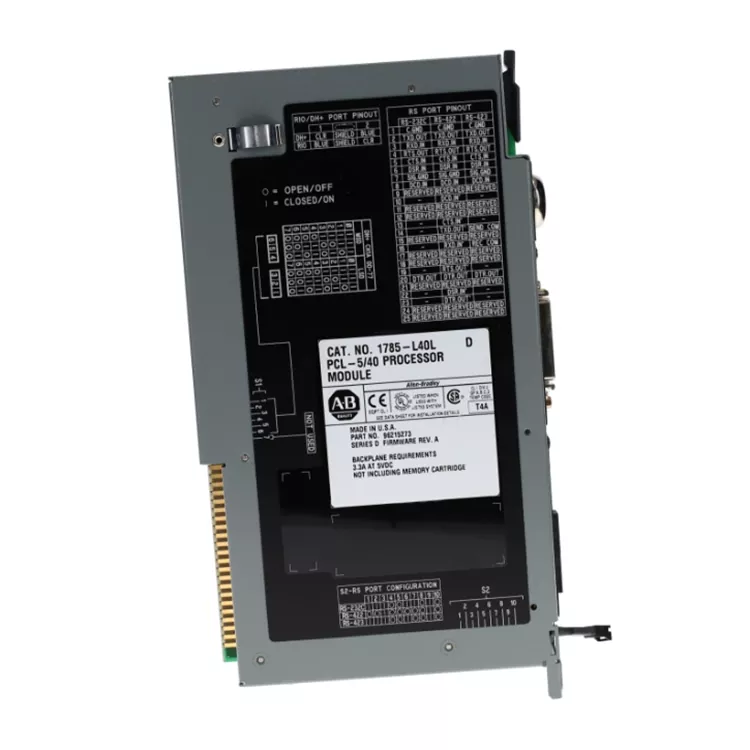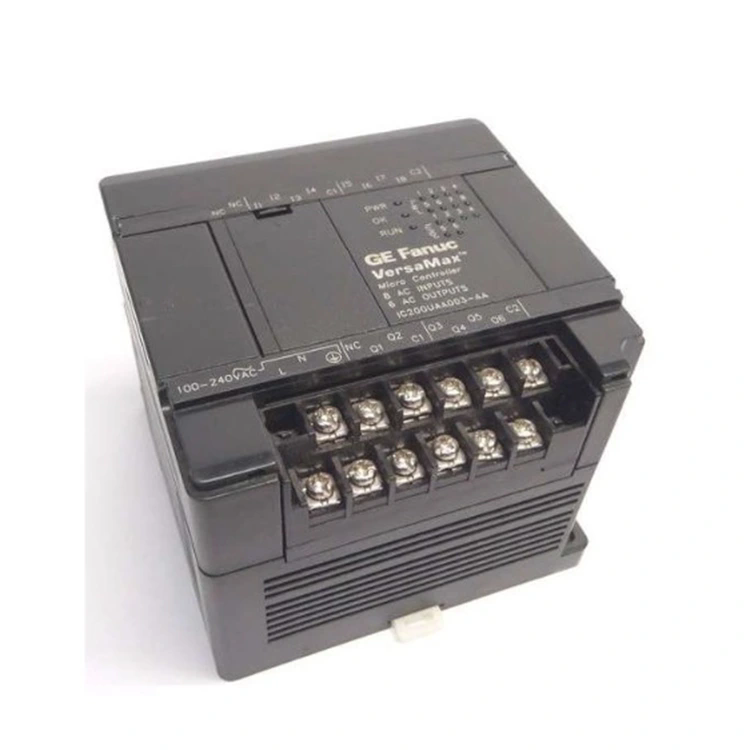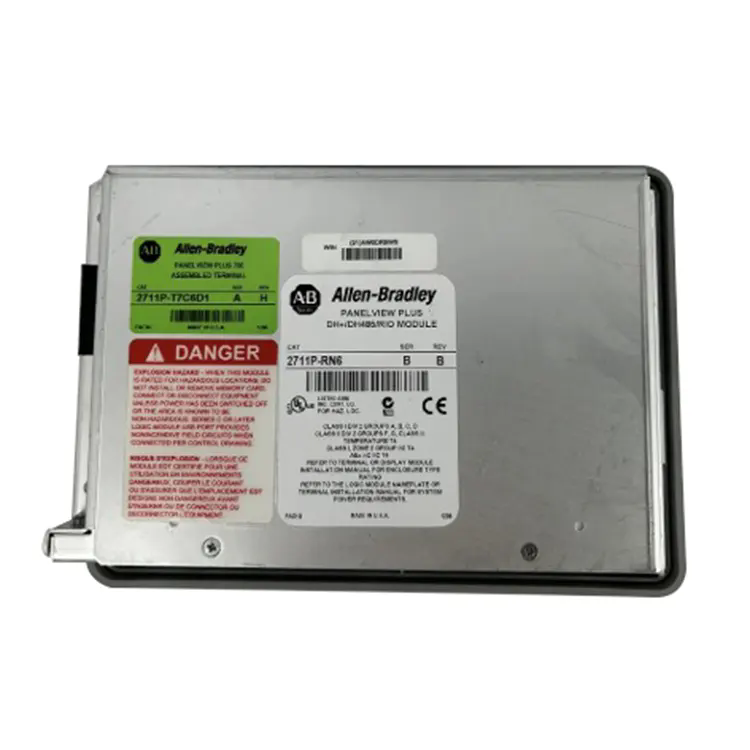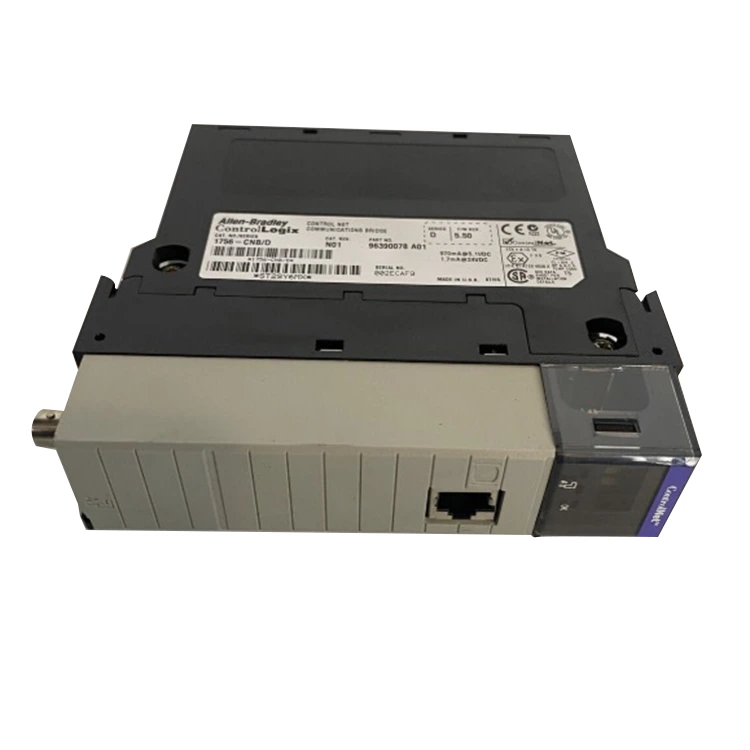
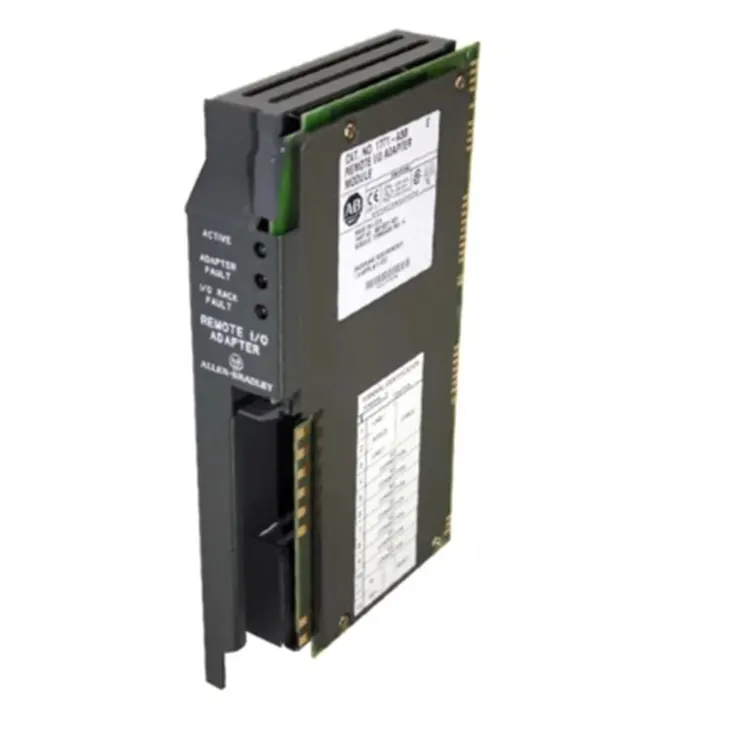
Feimu Technology has recently launched the Allen Bradley 1771-ASB classic remote I/O adapter/scanning module. Its core function is to securely transmit signals from the remote rack to the main control room via a dedicated blue cable. It is an essential item for maintaining the operation of old PLC-5 systems and for emergency spare parts replacement.

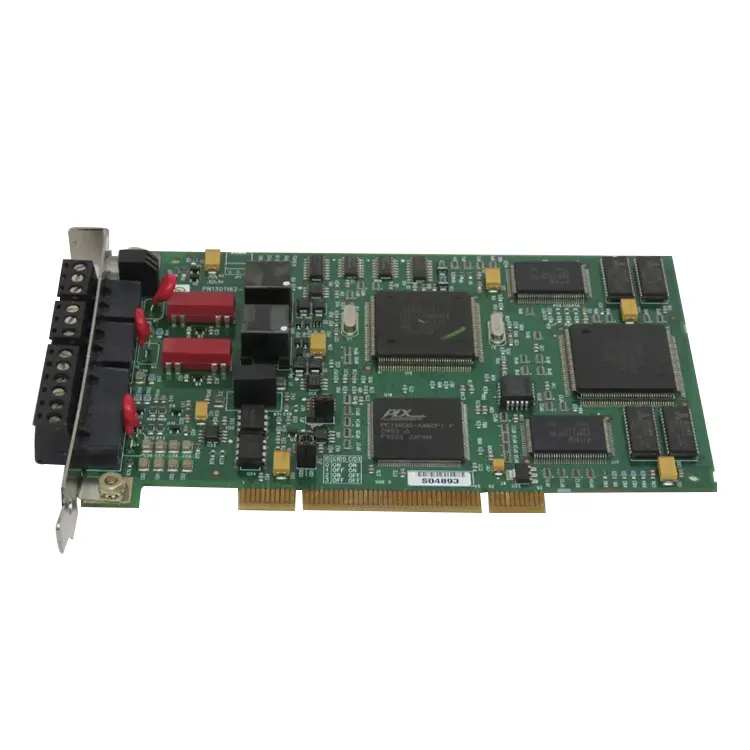
The internal structure of Allen Bradley 1771-ASB is highly industrial durable. The circuit board adopts a thickened design, with smooth and full solder joints, without any voids or missing soldering. Visually, it is neat and solid, making it reassuring to use. The board is equipped with multiple large capacitors and chips, with the core purpose being to ensure the long-term stable operation of the module, adapt to the complex circuit environment of old factories, and reduce the occurrence of faults.
To effectively resist signal interference in industrial sites, multiple isolation strips are specially designed on the circuit board to avoid communication interruptions caused by signal disorder; the gold pins on the back panel are a major highlight, with a thick and shiny gold plating, without oxidation or discoloration. Even when repeatedly plugged and unplugged on the rack, they can maintain good contact, eliminating communication failures caused by poor contact. Our supplied products are all of brand new quality, with strict quality control, and are fully compatible with old PLC-5 systems, allowing for immediate machine installation without the need for debugging.
The Allen Bradley 1771-ASB is mainly designed for unrenovated old factories. It is widely used in old automotive production lines, water treatment plants, early petrochemical industry automation systems, etc. Its core function is to serve as a "communication bridge" between the main PLC and on-site equipment. It is installed in remote field control cabinets and connects various input and output modules to ensure stable bidirectional signal transmission.
As a scarce spare part for the old system, the transportation safety of 1771-ASB is of utmost importance. Feimu Technology has accumulated rich experience in the transportation of precision industrial modules. It adopts multi-layer protective packaging: first, the module is placed in a thick anti-static bag, then it is completely wrapped and sealed with a thick layer of bubble film, and finally it is placed in a custom hard cardboard box, which is filled with foam paper for cushioning. This ensures complete isolation from static electricity and resistance to bumps during transportation. No matter it is shipped to the Americas, Europe, or various parts of China, our packaging can guarantee the module's intact condition upon opening, making it ready for use immediately. This completely addresses customers' concerns about "spare parts being prone to damage during transportation", thus securing valuable time for the emergency repair of the old system.

As a professional supplier, Feimu Technology is well aware of the problems of "difficulty in sourcing and slow delivery" for old spare parts. Therefore, it has specially reserved sufficient inventory. Allen Bradley 1771-ASB are all available for stock supply. They can quickly respond to customers' urgent purchasing needs without long waiting periods, effectively solving the problem of equipment failure and downtime.
The product is affordable in price and offers high value for money. We eliminate the middle links and set reasonable prices to enable customers to obtain high-quality new spare parts at a reasonable cost. There is no need to pay high premiums for scarce spare parts. At the same time, each module is tested under real working conditions to ensure that every communication interface can operate normally. Combined with professional technical support, we provide customers with selection and installation guidance, making the maintenance of old systems more convenient and reassuring.
| Parameter | Specification |
|---|---|
| Product Model | Allen Bradley 1771-ASB |
| Product Type | Remote I/O Adapter/Scanner Module |
| Compatible Processors | PLC-5, PLC-3, PLC-2, SLC 500 |
| Protocol | Remote I/O (RIO) |
| Operating Mode | Scanner or Adapter (configurable) |
| Data Transfer Rates | 57.6 kbps, 115.2 kbps, 230.4 kbps (jumper selectable) |
| Maximum Cable Length | 3048 meters (10,000 feet) with Belden 9463 cable |
| Maximum Remote Chassis | 7 chassis per scanner |
| Node Address Setting | Rotary switches (0-77 octal) |
| I/O Rack Compatibility | 1771 series I/O rack |
| Communication Cable | Belden 9463 (blue hose) |
| Backplane Current Draw | 1.5A at 5V DC maximum |
| Power Dissipation | 7.5W maximum |
| Module Size | Single-slot module |
| Operating Temperature | 0°C to 60°C |
| Storage Temperature | -40°C to 85°C |
| Relative Humidity | 5% to 95% (non-condensing) |
| Certifications | UL, cUL, CE |
The 1771-ASB is the key component that connects the PLC-5 processor to remote I/O racks. Understanding the network helps with installation and troubleshooting.
System architecture:
Data flow:
Node address range:
The 1771-ASB has two rotary switches on the front panel. These set the node address for the RIO network.
Switch location: The two switches are located on the front panel. They are labeled "TENS" and "UNITS".
How to set:
Example: To set node address 25 (octal), set TENS to 2 and UNITS to 5.
Important rules:
Common mistake: Setting the wrong octal address. The switches use octal (0-7) not decimal (0-9). Setting TENS to 8 or 9 is invalid and will cause the module to use a default address.
The 1771-ASB supports three data transfer rates. The rate must match the scanner configuration.
| Data Rate | Jumper Setting | Maximum Cable Length | Typical Application |
|---|---|---|---|
| 57.6 kbps | Jumper in position A | 3048 meters (10,000 ft) | Long distance, slow update |
| 115.2 kbps | Jumper in position B | 1524 meters (5,000 ft) | Medium distance, standard update |
| 230.4 kbps | Jumper in position C | 762 meters (2,500 ft) | Short distance, fast update |
How to select:
Field issue example: A customer installed a new 1771-ASB on an existing RIO network. The adapter would not communicate. Cause: The adapter was set to 230.4 kbps, but the scanner was set to 57.6 kbps. Fix: Changed the adapter jumper to 57.6 kbps. Communication was restored.
The 1771-ASB has several LEDs on the front panel. These provide immediate status information without a programming terminal.
| LED | Status | Meaning | Action |
|---|---|---|---|
| PWR | Green | Module powered and operating normally. | No action needed. |
| PWR | Off | No power to module. | Check chassis power. Check module insertion. |
| COM | Green | Communication active. Data is being sent or received. | No action needed. |
| COM | Off | No communication. Link is not established. | Check cable. Check scanner. Check node address. |
| COM | Yellow | Communication warning. Intermittent errors. | Check cable quality. Check terminators. |
| FLT | Red | Module fault. Hardware or configuration error. | Cycle power. Check configuration. Replace if red remains. |
| FLT | Flashing | Configuration error. Node address conflict or invalid setting. | Check node address. Check jumper settings. |
Allen Bradley 1771-ASB modules are commonly counterfeited. Use these checks to verify authenticity.
If the module shows a red FLT LED after correct configuration, suspect a counterfeit. Contact Feimu Technology with photos for verification.
What's the difference from ordinary I/O modules?
It doesn't directly connect sensors or actuators. It's a communication interface. One end communicates with the processor (such as PLC-5) through a remote I/O link, and the other end connects to a 1771 series I/O rack, driving the input/output modules on the rack to conduct actual data exchange.
Which compatibility information needs to be confirmed?
Designed for the 1771 series I/O rack, mainly supporting PLC-5, PLC-2/3 series processors, connected via Belden 9463 cable, using the Remote I/O communication protocol.
Address
No. 26, Yuhu Street, Encheng Subdistrict, Enping City, Jiangmen City, Guangdong Province, China
Tel