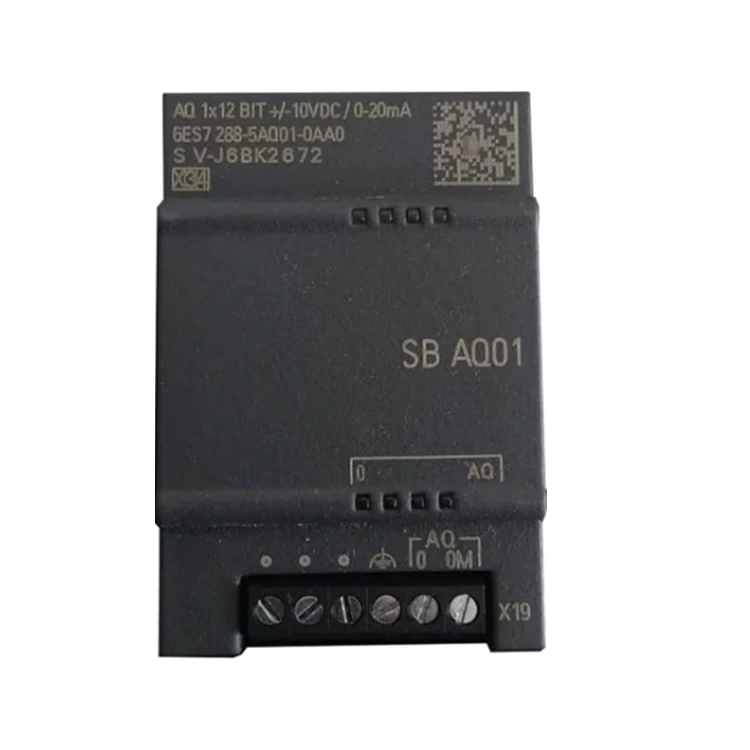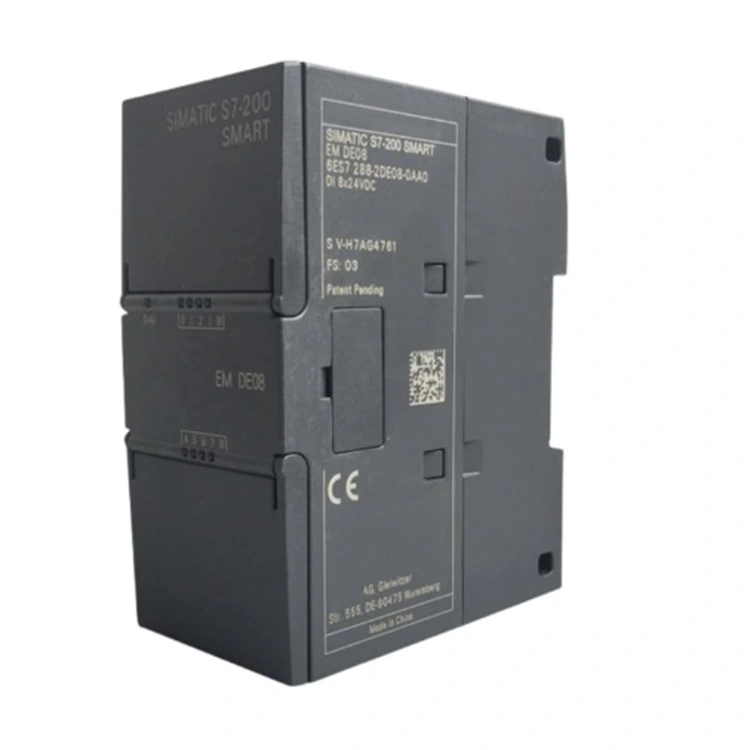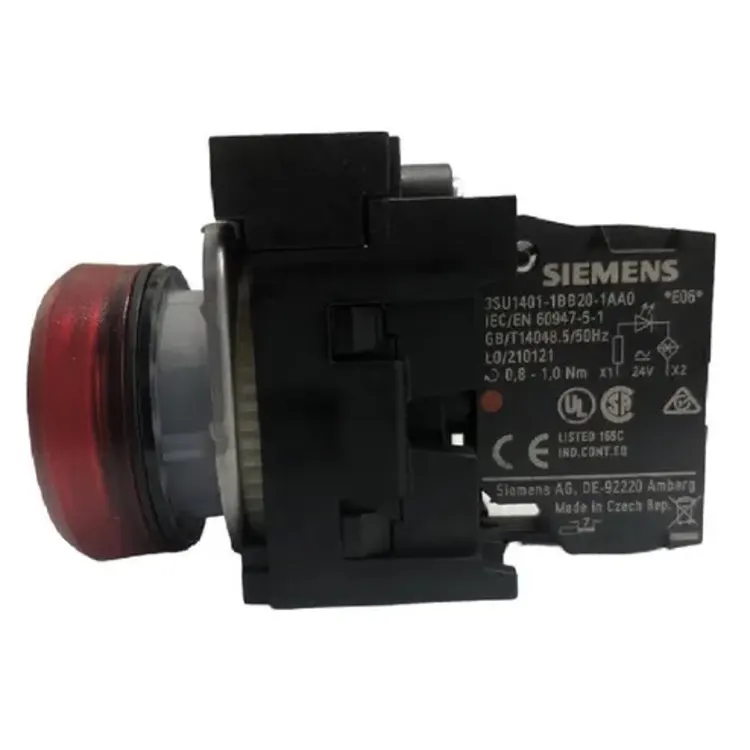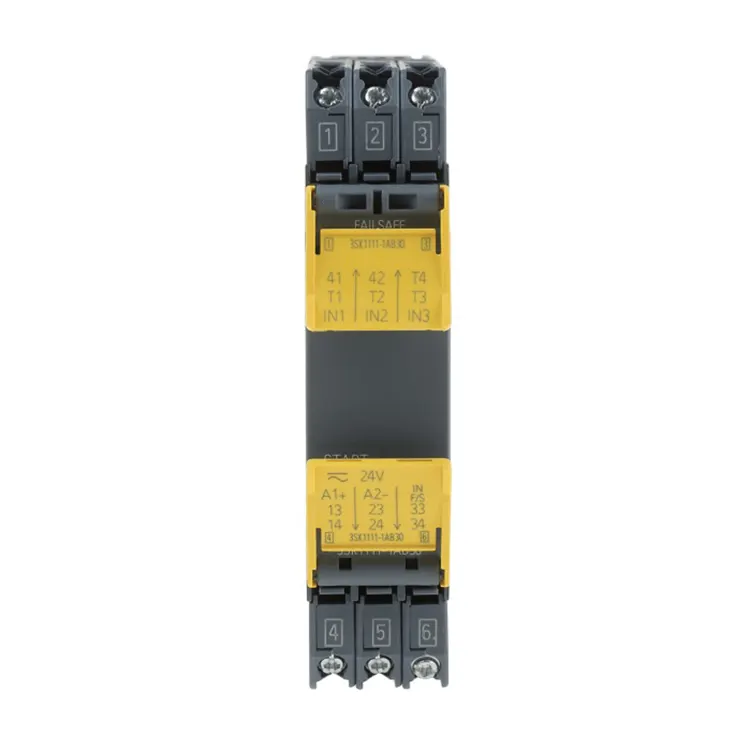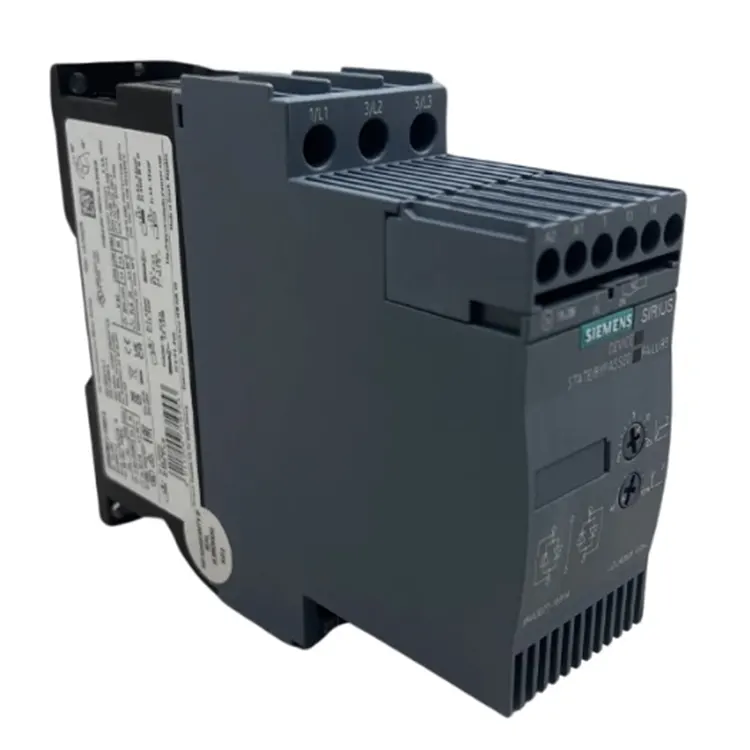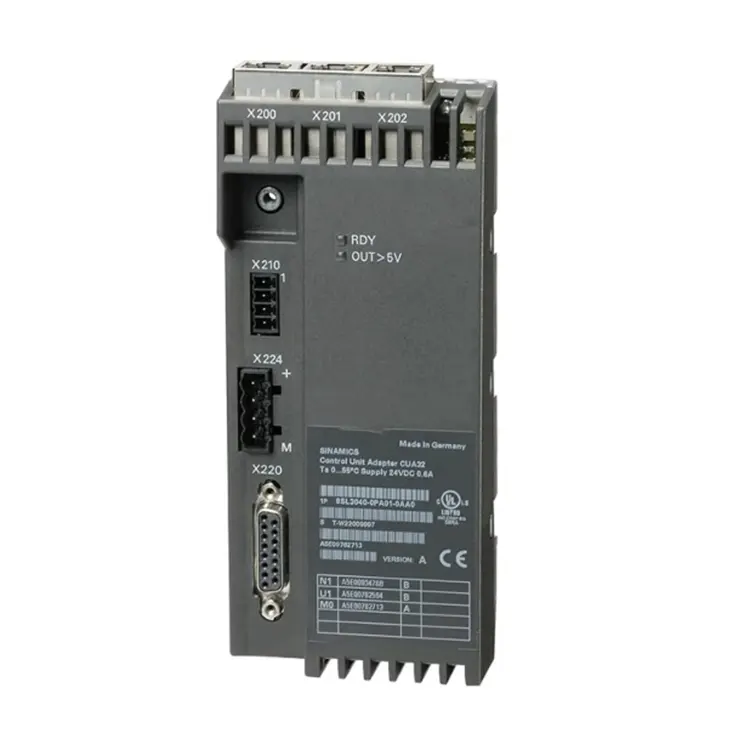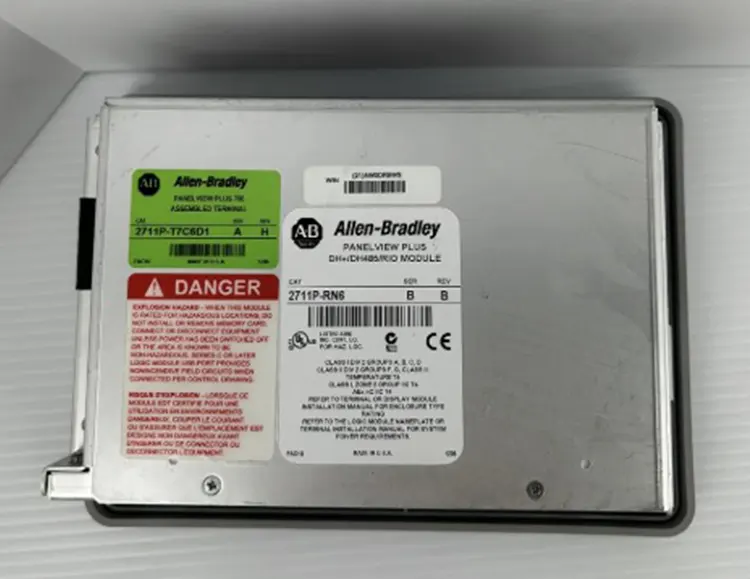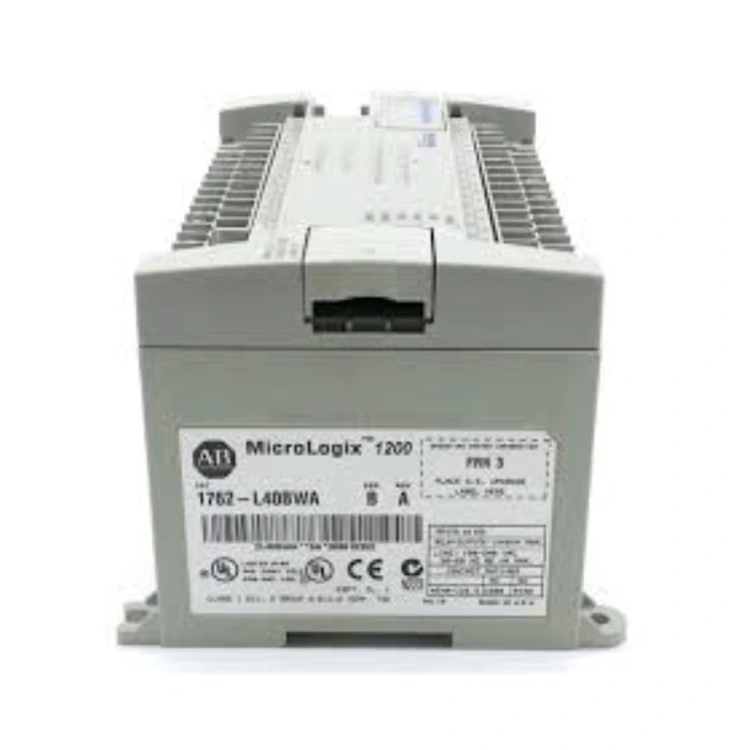

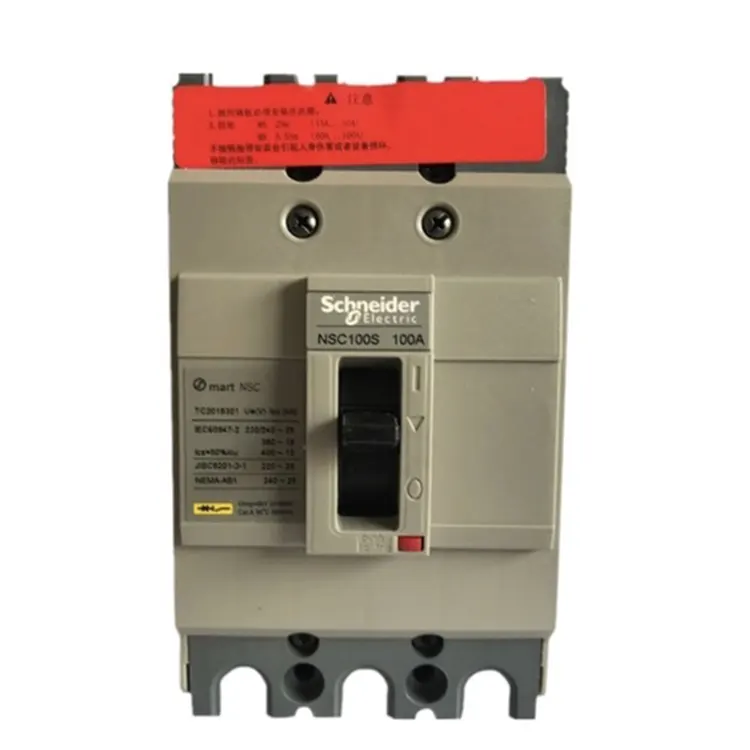
Feimu Technology Company has specially prepared a very practical connection device for overseas industrial control engineers in the field of low-voltage power distribution - the Siemens NSC100S enclosed load switch, which is also known as an isolating switch. As everyone knows from their daily equipment maintenance or line inspection work, safety is always the top priority. With this switch, the power supply can be completely cut off, allowing people to work with peace of mind.
As a professional spare parts supplier, Feimu Technology Company recommends this compact structure, reliable operation, and strong interrupting capacity switch to everyone, in order to provide your power distribution system with an additional solid safety line, completely eliminating the risk of live operation and making the control of circuit on-off simple and intuitive.
Siemens NSC100S rated current is 100A, which can easily power most small and medium-sized loads. Its breaking capacity is very strong. Its breaking ability is very strong. Even if there is a short circuit and large current behind the line, it can also be steadily disconnected, and there will be no contact fusion welding together. Its mechanical lifespan is very long, and it can operate thousands or even tens of thousands of times without any problem, and the mechanism remains flexible and reliable. Moreover, its dynamic stability is good, and it can withstand certain short-circuit impact currents without being damaged.
This product is used in an extremely wide range of applications. The most common ones include power inlet switches for mechanical equipment, main inlet switches for distribution cabinets, and main switches for lighting boxes. In any situation where power needs to be manually turned on and off frequently, or where there is a need for a clear disconnect point for safety maintenance, NSC100S is definitely the main player. It is a safety checkpoint in the low-voltage power distribution system, responsible for completely cutting off the power when necessary.
|
Product Model |
Siemens NSC100S (7SJ600 Series) |
|
Product Series |
SIPROTEC 4 |
|
Protection Functions |
Overcurrent, Short Circuit, Ground Fault Protection |
|
Rated Current |
1A or 5A (Selectable, depends on suffix) |
|
Rated Voltage |
DC/AC 24V - 250V (Auxiliary Power) |
|
Communication Interface |
RS485 (Supports Modbus Protocol) |
|
Mounting Method |
Panel Flush Mounting |
|
Display Type |
Front LCD Display |
Correct installation ensures safe operation and proper heat dissipation. Follow these requirements for the NSC100S.
| Installation Requirement | Specification | Why This Matters |
|---|---|---|
| DIN rail type | EN 60715, 35mm width | Wrong rail prevents proper clip engagement |
| Mounting orientation | Vertical only. Handle facing up. | Other orientations reduce switching capacity |
| Clearance above | 50mm minimum | Allows heat dissipation from the switch |
| Clearance below | 50mm minimum | Allows cable entry and heat dissipation |
| Clearance sides | 10mm minimum | Prevents arc flash to adjacent equipment |
| Remote operating temperature | Do not exceed 55°C ambient | Exceeding reduces electrical life |
Installation steps:
Field issue example: A customer installed the switch horizontally in a confined cabinet. The switch tripped during a 70A load. Cause: Heat buildup reduced the switch capacity. Fix: Re-mounted vertically. The switch operated correctly.
Proper wire sizing and terminal torque prevent connection failures and fire hazards. Use these specifications for NSC100S connections.
| Parameter | Copper Wire | Aluminum Wire (Not Recommended) |
|---|---|---|
| Minimum conductor size | 10mm² (6 AWG) | 16mm² (not recommended) |
| Maximum conductor size | 35mm² (2 AWG) | Not applicable |
| Recommended size for 100A | 16mm² or 25mm² | Not applicable |
| Torque setting | 1.5Nm ±10% | Not applicable |
| Strip length | 15mm to 18mm | Not applicable |
Torque rules:
Field issue example: A customer used 6mm² wire on a 100A circuit. The terminal overheated. The insulation melted. Cause: The wire was too small for the current. Fix: Replaced with 16mm² wire. The temperature dropped to normal.
Maintenance engineers sometimes confuse the NSC100S with a standard MCB. This comparison clarifies the differences.
| Feature | NSC100S Load Switch | Standard MCB |
|---|---|---|
| Primary function | Isolation and switching | Overcurrent protection |
| Visible break | Yes. Clear OFF position visible. | No. Internal contacts not visible. |
| Overload protection | No. Requires separate protection device. | Yes. Built-in thermal and magnetic protection. |
| Short circuit protection | No. Requires separate fuse or breaker. | Yes. Built-in magnetic trip. |
| Lockable in OFF position | Yes. Padlockable handle. | No. Not designed for lockout/tagout. |
| Switching duty | Rated for load switching | Rated for fault interruption |
| Contact position indication | Visible handle position | Handle position only. No visible contact. |
When to use each device:
Both devices have different purposes. Do not replace one with the other without checking the circuit design.
The NSC100S is designed with a lockout feature for safety during maintenance. This is one of its key advantages over standard switches.
Lockout capability: The switch handle has a hole for a padlock. When the handle is in the OFF position, a padlock can be inserted. This locks the switch in the OFF position. No one can turn it on without removing the padlock.
Lockout procedure:
When to use lockout:
Safe practice: A lockout/tagout procedure prevents accidental re-energization. The NSC100S supports this procedure. Always follow your company's lockout/tagout policy. The switch provides the isolation point. The procedure provides the safety.
The NSC100S requires minimal maintenance. However, periodic checks prevent unexpected failures. Use this schedule for maintenance.
| Inspection Item | Frequency | Method | Action if Failed |
|---|---|---|---|
| Terminal tightness | Every 6 months | Check torque with calibrated screwdriver | Re-tighten to 1.5Nm |
| Handle operation | Every 3 months | Turn ON and OFF 3 times | Replace if stiff or stuck |
| Contact condition | Yearly | Check resistance across contacts | Replace if contact resistance above 0.5Ω |
| Visible damage | Monthly | Visual inspection of housing | Replace if cracked or melted |
| Dust accumulation | Every 6 months | Clean with compressed air | Clean thoroughly |
| Label condition | Yearly | Check if the switch label is readable | Replace if labels are faded or missing |
When to replace the switch:
Siemens NSC100S switches are widely available. Counterfeit versions exist in the market. Use these five checks to verify authenticity.
If the switch makes unusual noise when switching or shows uneven resistance across poles, suspect counterfeit. Contact Feimu Technology with photos for verification.
Feimu Technology operates from Jiangmen City, Guangdong Province, China. The company was founded in 2005 and has supplied automation and low-voltage components to customers in over 30 countries.
Address
No. 26, Yuhu Street, Encheng Subdistrict, Enping City, Jiangmen City, Guangdong Province, China
Tel